Two strand twist locs get treated like a single look, small twists left to lock over months, when the technique actually supports a wide range of sizes, styles, and stages. The method itself, twisting two sections of hair around each other from root to tip, stays the same, but everything else about how it’s worn is genuinely up to you. Whether you’re starting your loc journey or years into mature locs, the versatility is part of what’s kept this method so popular within the natural hair community.
Classic Micro Two Strand Twist Locs
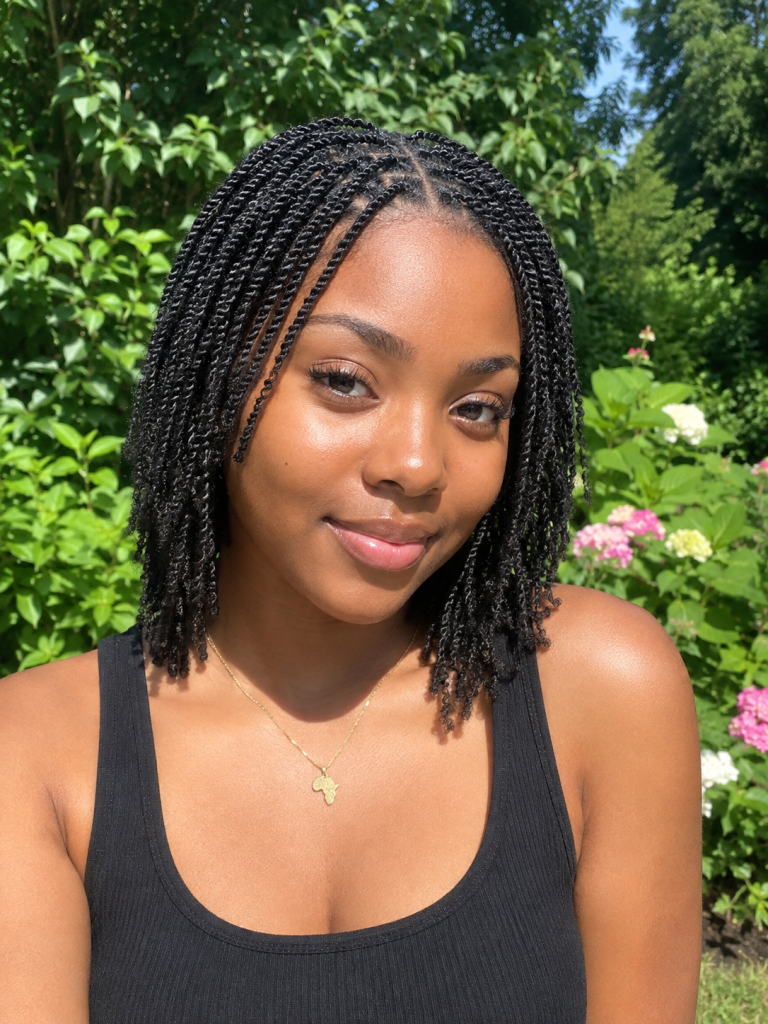
Small, uniform twists sectioned in tight, consistent parts create a refined, detailed look that suits both starter and mature locs. This size takes longer to install but offers more styling versatility since the smaller locs can be pulled into intricate updos more easily than chunkier sizes. Regular retwisting keeps the roots neat.
Medium Two Strand Twist Locs
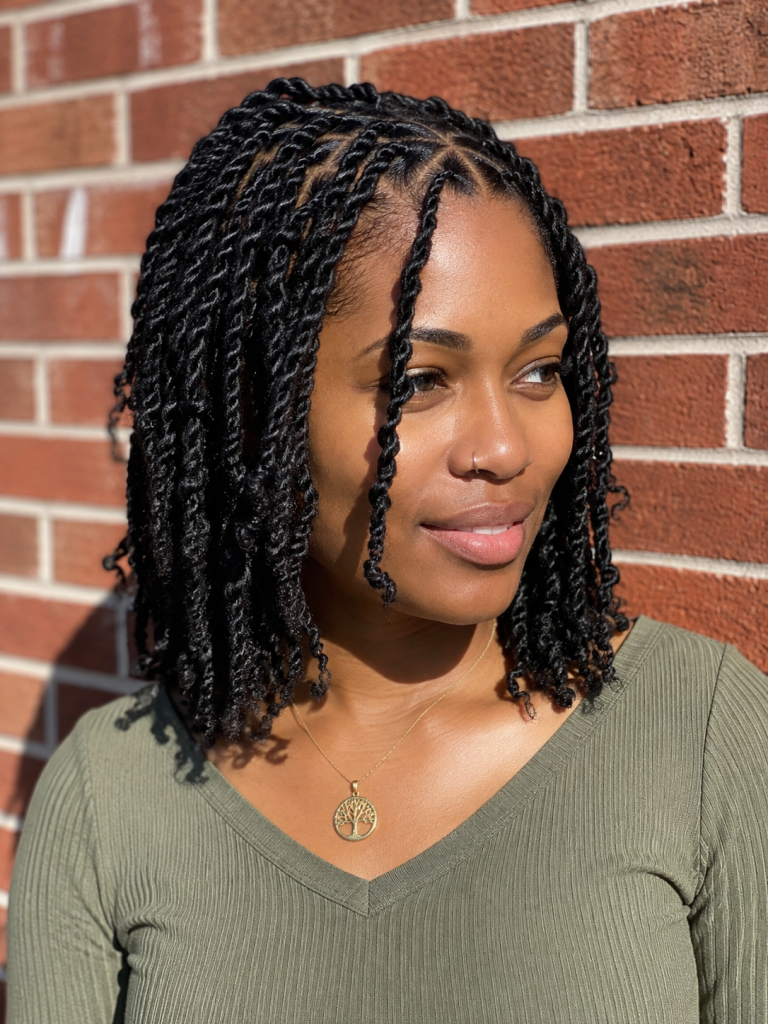
A middle-ground size between micro and chunky, medium twist locs balance styling flexibility with a faster installation time. This size works well for those newer to locs who want manageable maintenance without committing to the smallest, most time-intensive option. Retwist every four to six weeks to keep new growth controlled.
Chunky Two Strand Twist Locs
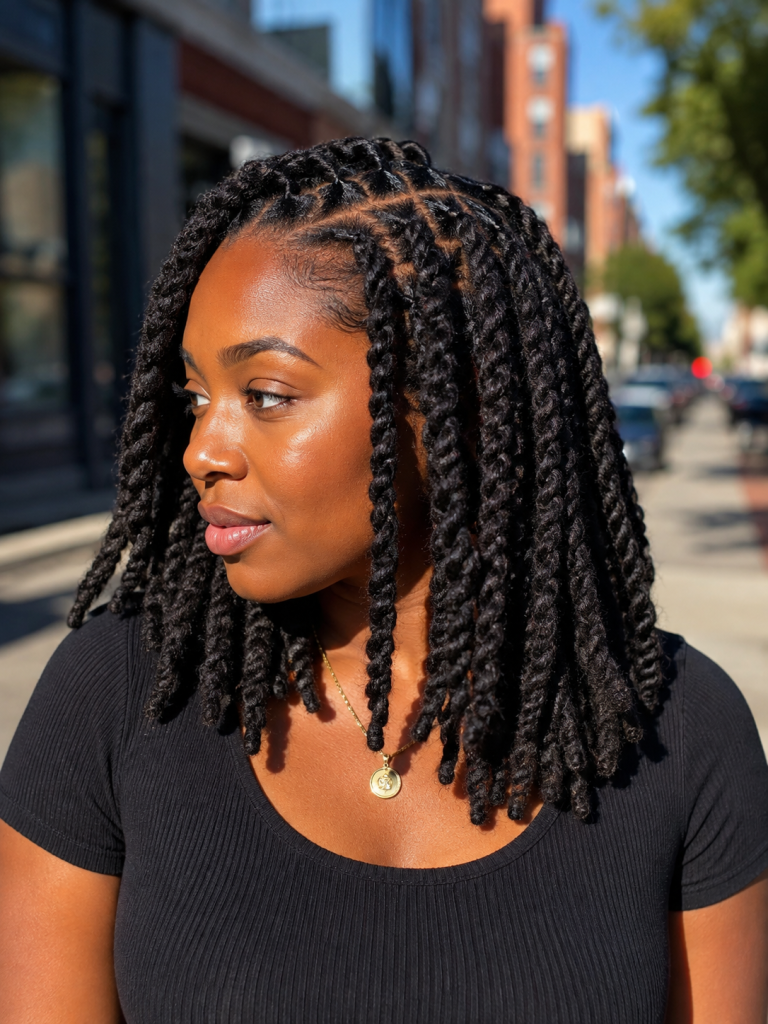
Larger sections twisted from root to tip create bold, statement-making locs with real visual weight. This size is faster to install and typically requires less frequent retwisting than smaller options, making it a lower-maintenance choice overall. Chunky locs also mature and thicken noticeably as they lock over time.
Freshly Installed Starter Locs
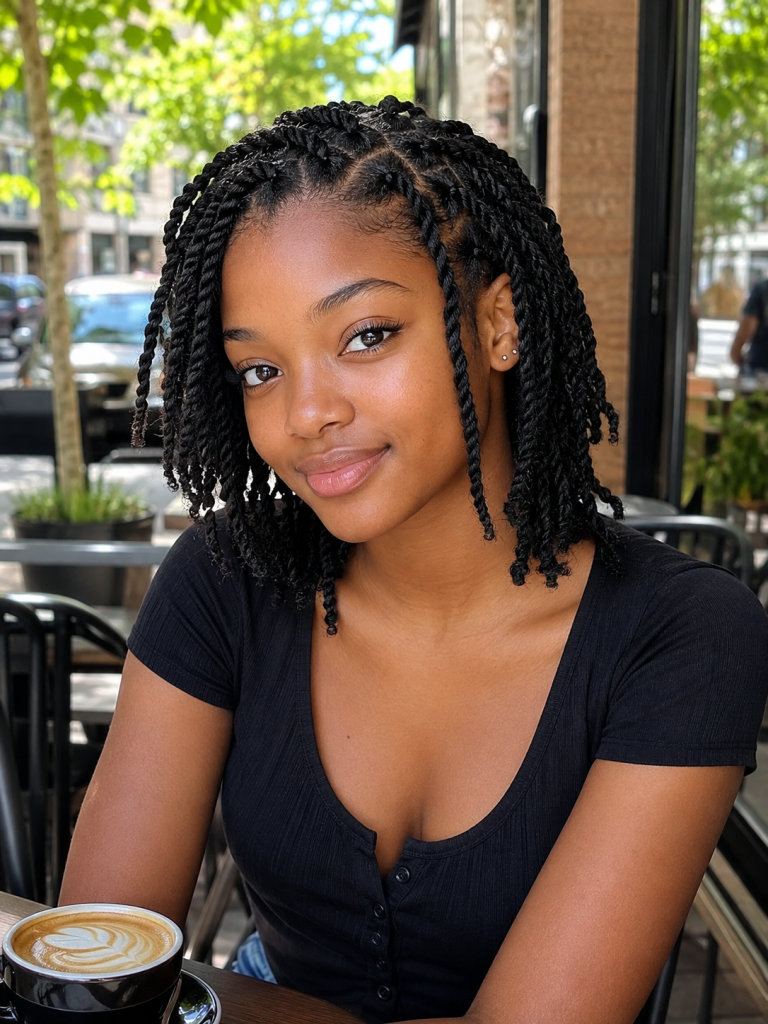
In the earliest stage, two strand twist locs look crisp, uniform, and still fully twisted, since the locking process hasn’t fully taken hold yet. This is the stage most people install themselves or with a loctician’s help. Expect some unraveling at the ends during this period, which is a normal part of the process.
Budding Two Strand Twist Locs

Somewhere between starter and mature, budding locs start to show the early stages of actual locking, with slight frizz and a less uniform twist pattern than when freshly installed. Palm rolling during this stage helps encourage the locking process along without disrupting the hair’s natural texture too aggressively.
Mature Two Strand Twist Locs
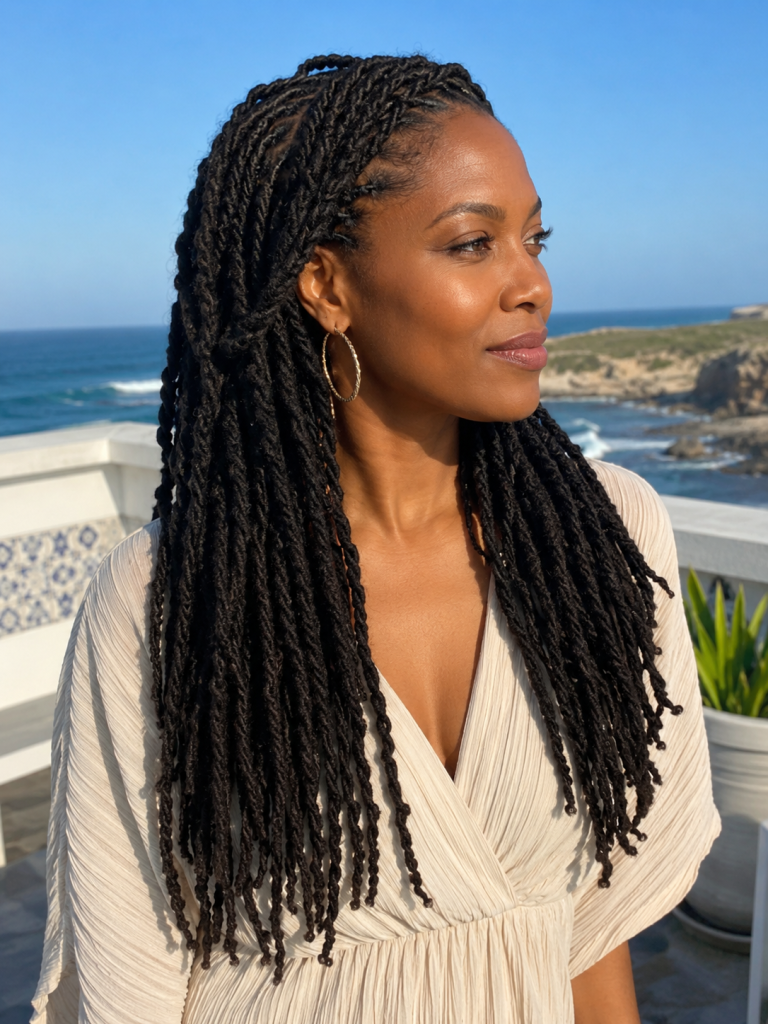
Fully locked and often several years into the journey, mature locs have a dense, rope-like texture that no longer resembles a simple twist. At this stage, locs typically require less frequent maintenance since they’ve fully bonded. Many people find styling becomes easier once locs reach full maturity.
Colored Two Strand Twist Locs
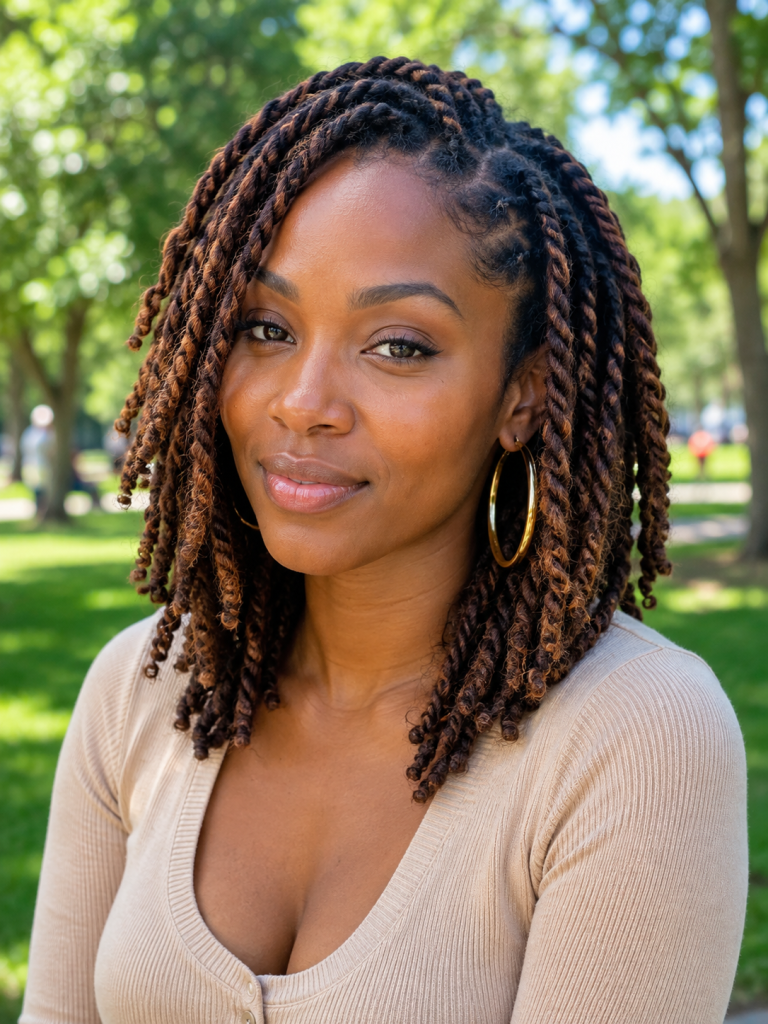
Adding color, whether subtle highlights or a bold overall shift, brings dimension to twist locs at any stage. Semi-permanent color options tend to be gentler on the hair than full lightening, which can be more drying for locs specifically. A gloss treatment between color sessions helps maintain vibrancy and shine.
Loc Updo with Twist Locs
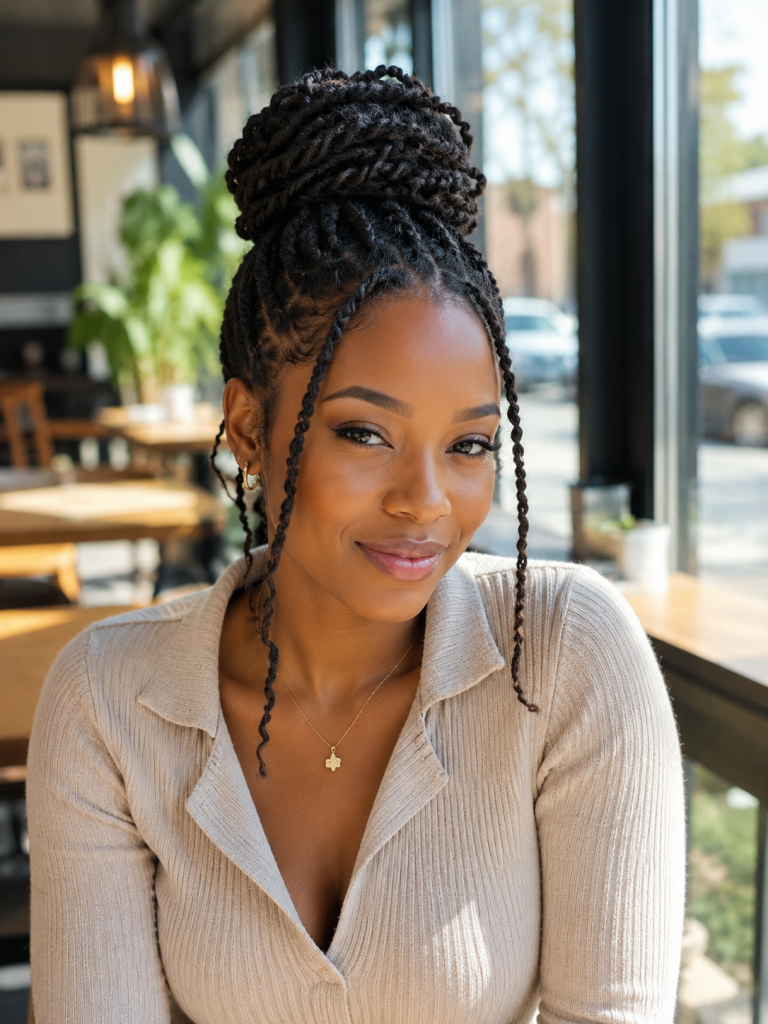
Gathering two strand twist locs into a high or low bun creates a polished, formal option for special occasions. Medium to micro sized locs work best for this style since they’re easier to manipulate into a smooth, secure shape. Leave a few shorter face-framing locs loose for added softness.
Half-Up Two Strand Twist Locs
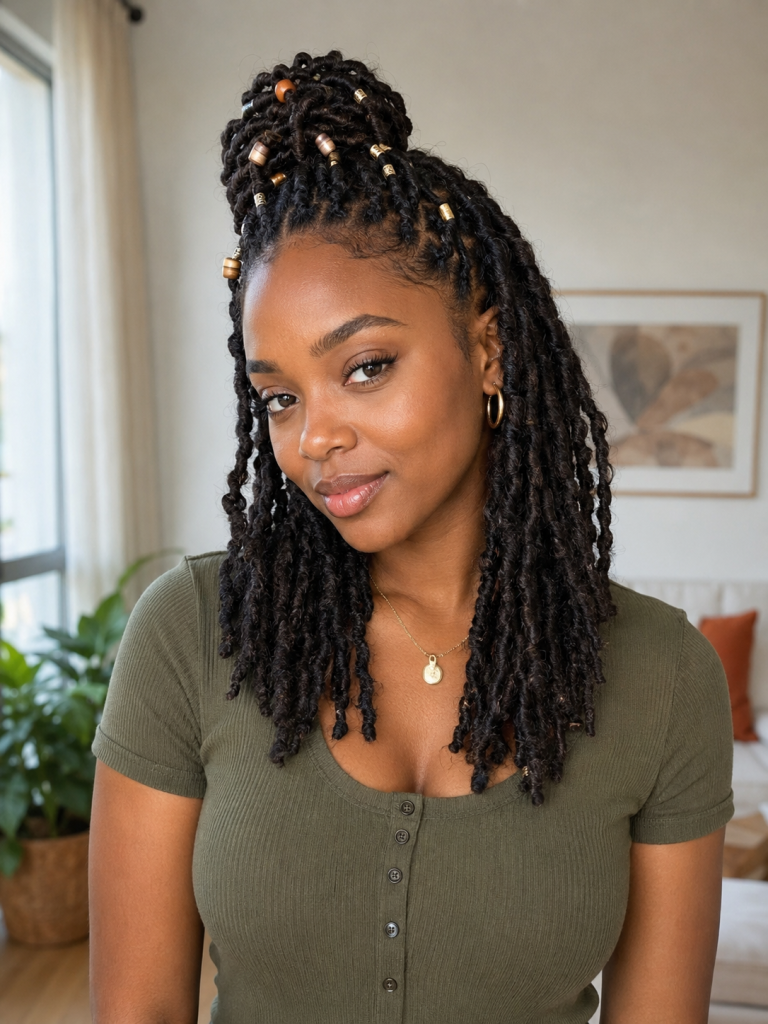
Pulling the top section of locs back while leaving the rest down offers a versatile everyday option that keeps hair off the face without a full updo. This style works at any loc length or stage and pairs well with accessories like beads or wraps woven into the top section.
Twist Locs with Beads
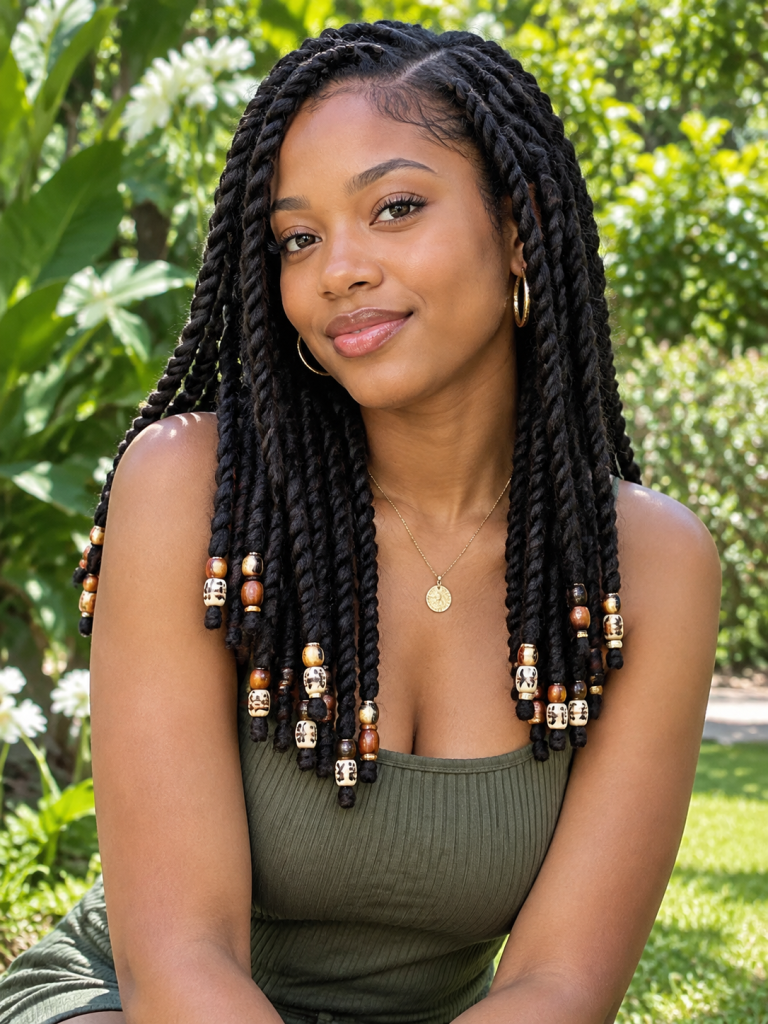
Adding beads to the ends of individual locs brings movement and a decorative element that’s especially popular during earlier loc stages when ends are still slim enough to accommodate them. Choose lightweight beads to avoid unnecessary tension on the hair, especially near the scalp.
Root-Twisted Retwist Style
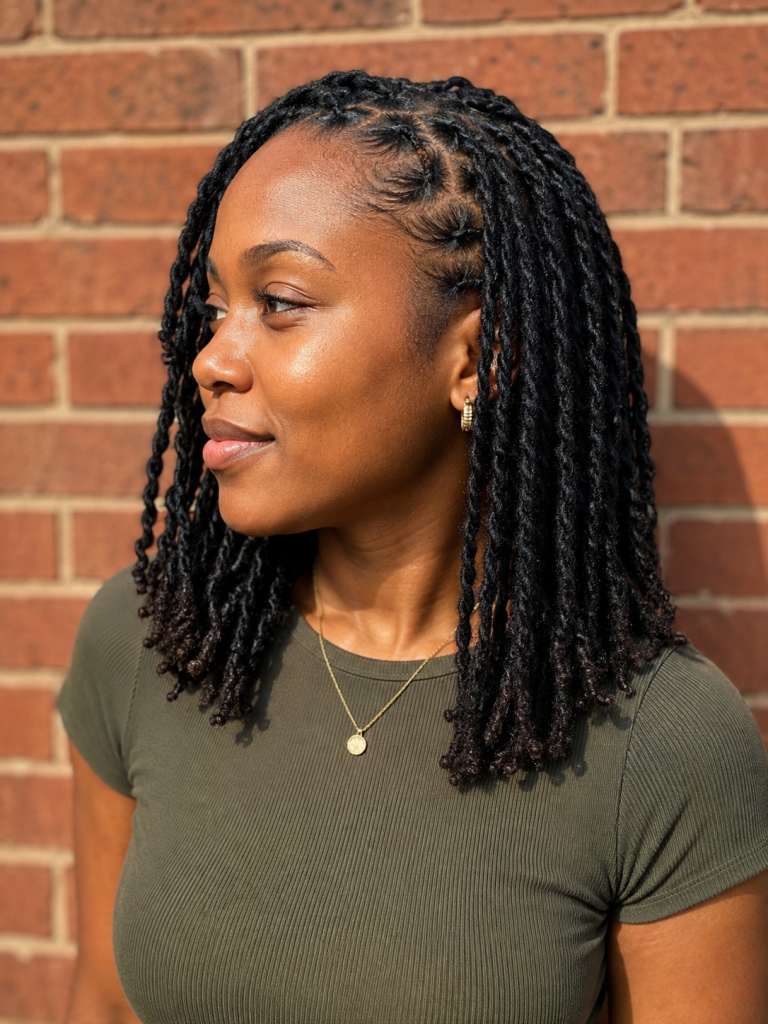
A fresh retwist focused specifically at the roots gives locs a clean, just-maintained appearance without redoing the full length. This is a common maintenance approach for those wanting to extend time between full retwists while still keeping new growth controlled and the overall style looking neat.
Faux Locs Using Two Strand Twist Method
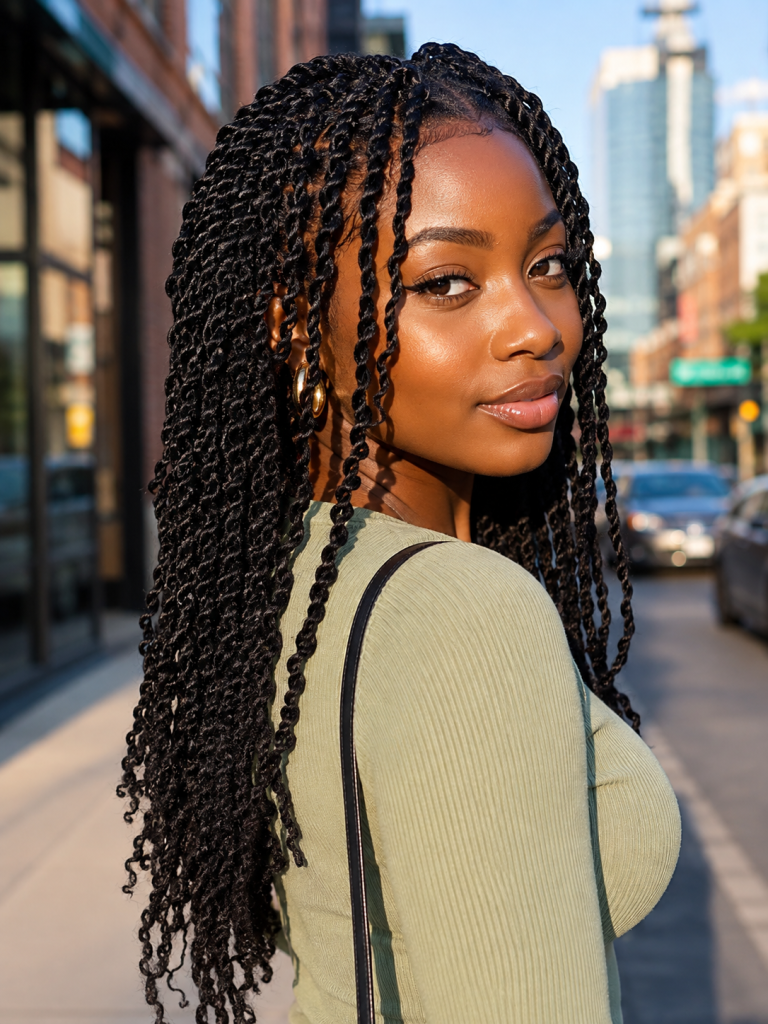
For those not ready to commit to permanent locs, the two strand twist technique can be used with extensions to create a temporary loc look that can be removed later. This offers a way to test the style and sizing preferences before committing to the real loc journey.
Two Strand Twist Locs with Side Part

A deep side part adds visual interest and asymmetry to an otherwise uniform grid of twist locs. This works particularly well for shorter starter locs, where the part is more visible and can help define the overall shape while the locs are still developing their mature texture.
Twist Locs Pulled into a Ponytail
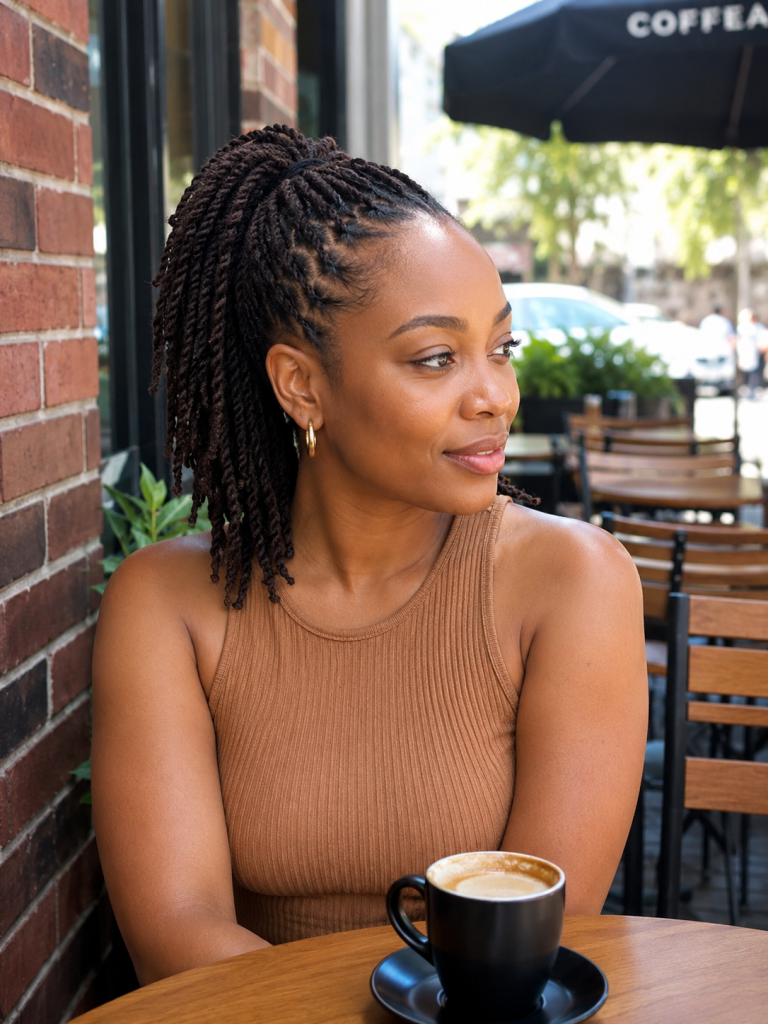
Gathering all locs into a single ponytail, secured at the crown or nape depending on preference, offers a simple, everyday styling option that works at nearly any loc length. Wrapping a small section of hair or fabric around the base hides the elastic for a cleaner finish.
Shoulder-Length Two Strand Twist Locs

At this length, twist locs have enough weight to move naturally while still being manageable for most styling options, from updos to half-up looks. This length often marks a transitional stage in the loc journey where the hair has locked enough to feel established but continues to mature and thicken.
Long Mature Two Strand Twist Locs

Fully mature locs at a longer length carry significant visual impact and often represent years of growth and maintenance. At this stage, locs tend to have a denser, more textured feel throughout, and styling options expand to include larger, more dramatic updos that shorter locs can’t yet support.
Twist Locs with Wrapped Accent Sections

Wrapping thread or fabric around select sections of twist locs adds a decorative, textured element without affecting the rest of the style. This is often used to highlight a few face-framing locs or create a subtle pattern throughout, adding personalization without a permanent color or cutting commitment.