Short locs get overlooked in a lot of styling content, most tutorials assume enough length for a bun or a dramatic updo, leaving early-stage loc wearers without much direction. But short locs actually hold styles well precisely because they’re lighter and easier to manipulate than longer, heavier locs. The right technique turns limited length into an advantage rather than a limitation, especially once locs have progressed past the very earliest starter stage.
Classic Short Starter Locs
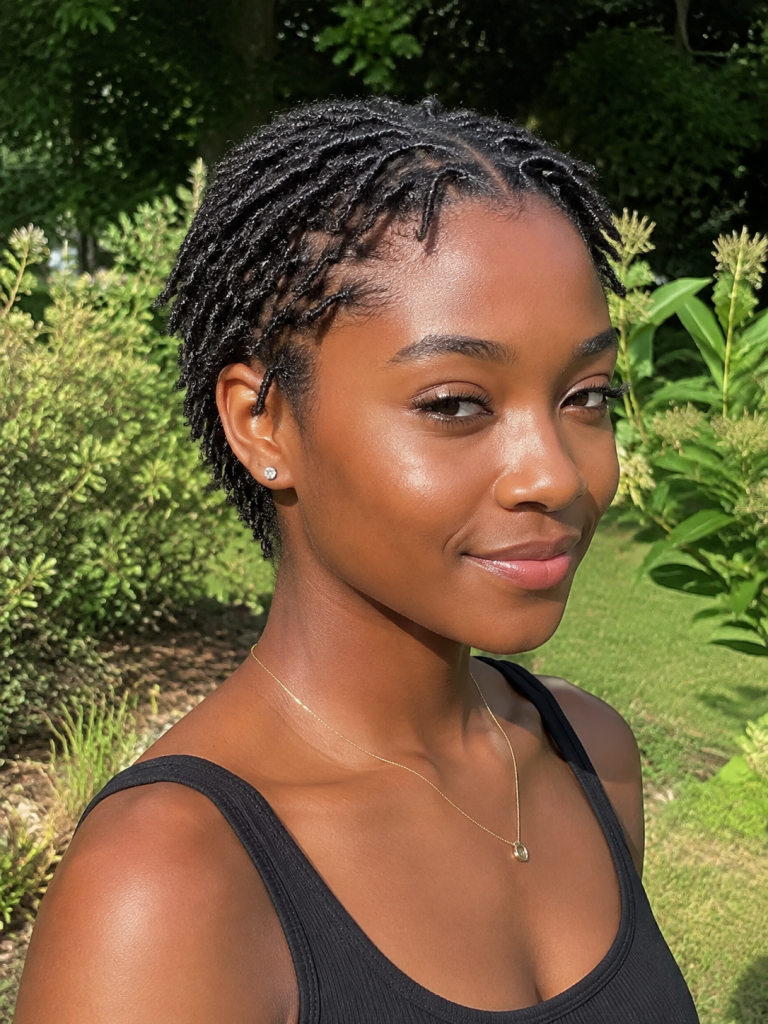
Freshly twisted or coiled locs at their shortest stage look crisp and uniform, since the locking process hasn’t fully taken hold yet. This is the natural starting point for most loc journeys and requires minimal styling beyond basic maintenance and patience while the hair begins to mature.
Short Locs with Side Part
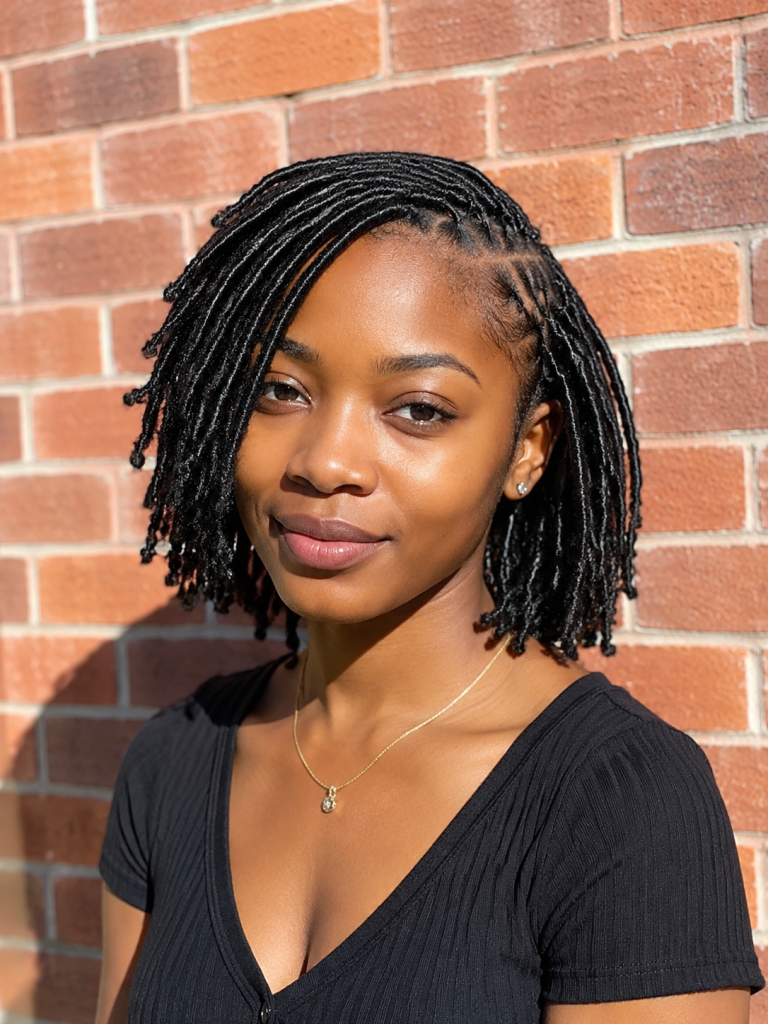
A deep side part adds visual interest and asymmetry to a grid of short locs. This works particularly well at this length, where the part is more visible and helps define the overall shape while the locs continue developing their mature texture over the following months.
Half-Up Short Locs
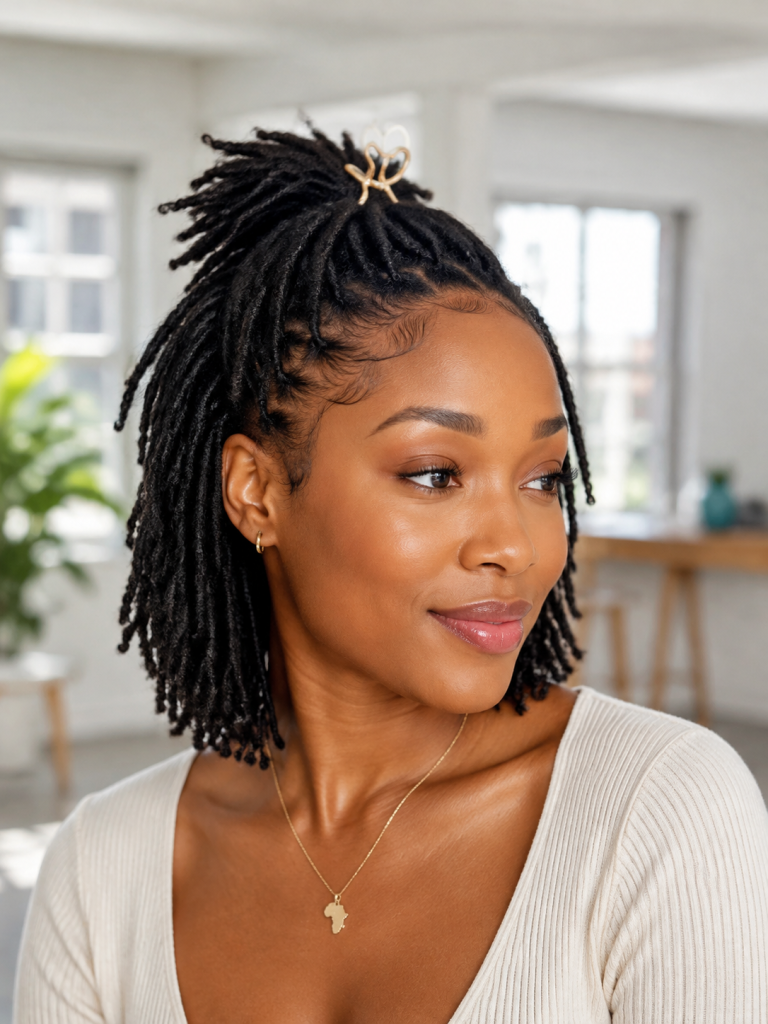
Pulling the top section of short locs back while leaving the rest down keeps hair off the face without needing enough length for a full gathered style. This works at nearly any short loc stage and pairs well with a small elastic or decorative pin to secure the top section.
Short Locs with Beads
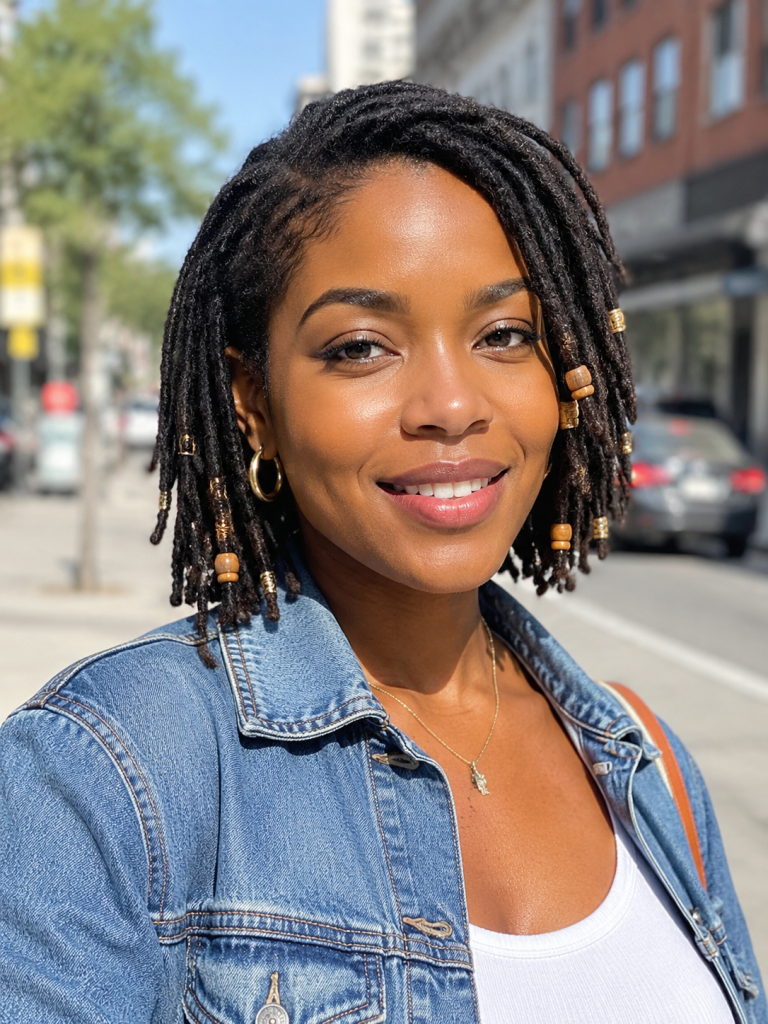
Adding beads to the ends of individual short locs brings movement and a decorative element that works especially well at this length, since shorter ends are often slimmer and easier to thread beads onto than thicker, more mature locs. Choose lightweight beads to avoid unnecessary tension near the scalp.
Faux Hawk Short Locs
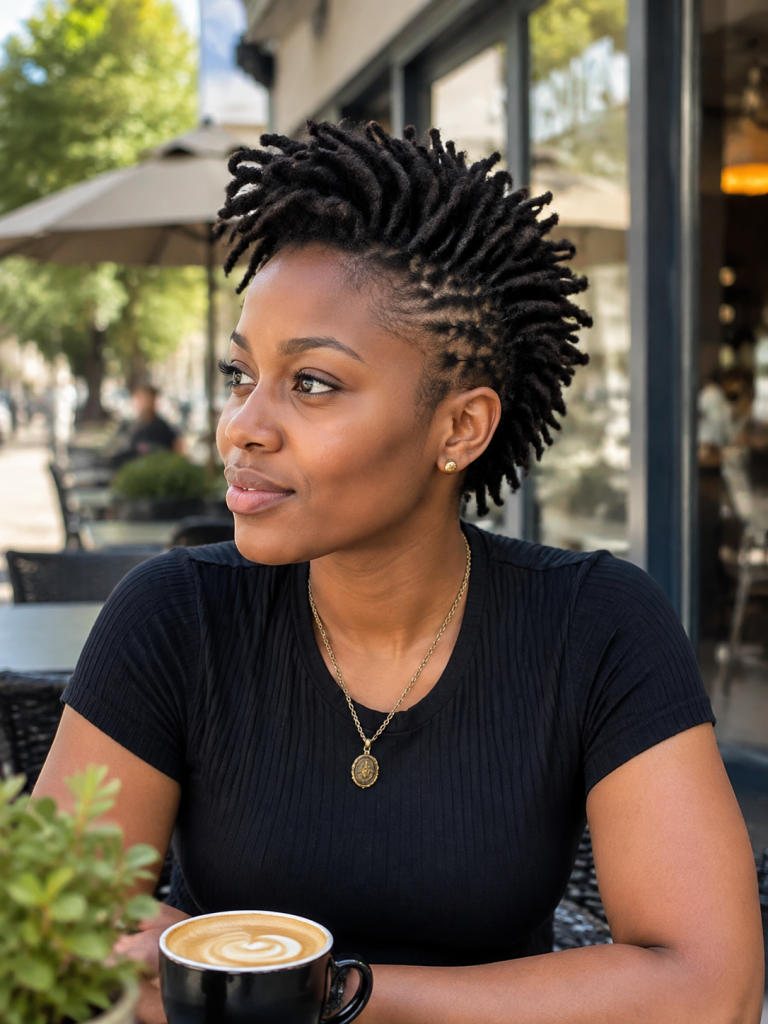
Pulling the center section of short locs up and securing it while leaving the sides flat creates a bold, faux hawk silhouette. This style works particularly well at shorter lengths, where the dramatic height contrast reads clearly against the closely cropped sides.
Short Locs Pulled Back Fully
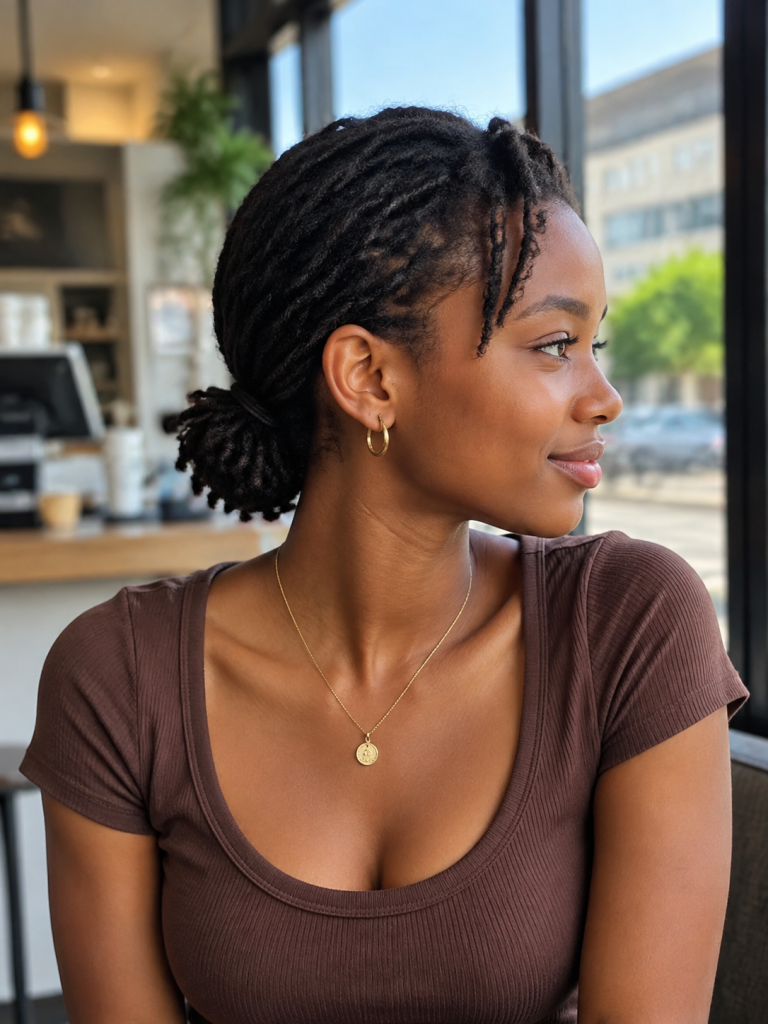
Gathering all short locs back and securing them at the crown or nape with a small elastic offers a simple, everyday styling option. Wrapping a section of hair or fabric around the base hides the elastic for a cleaner finish. This works well for workouts or low-maintenance days.
Colored Short Locs
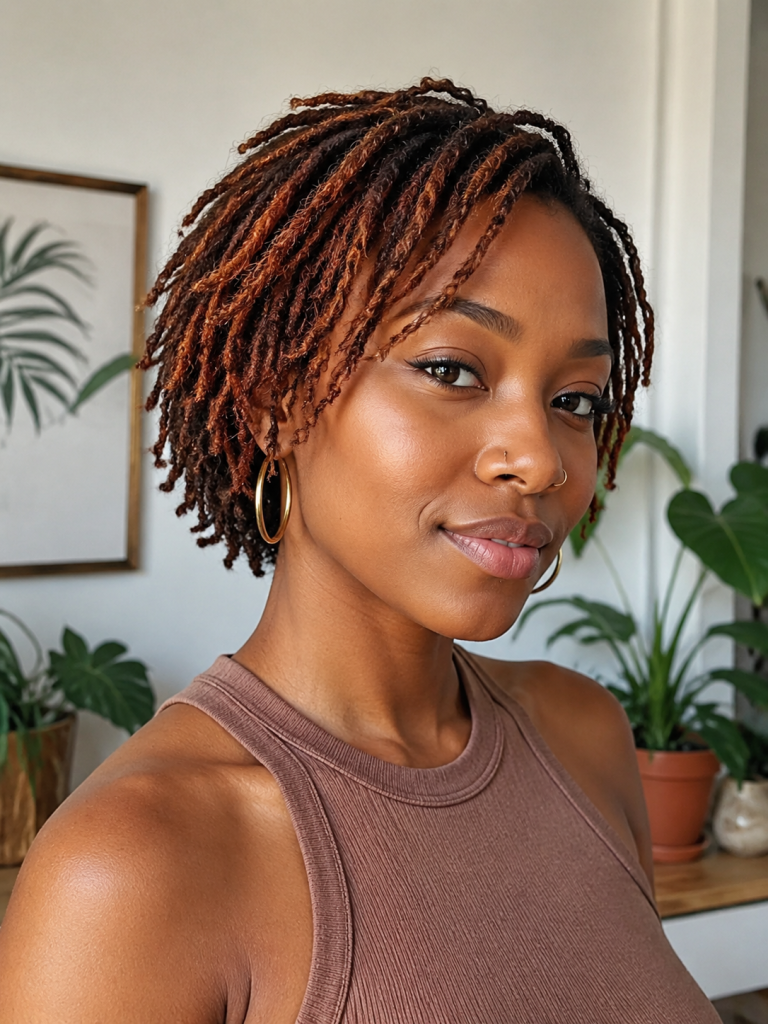
Adding color, whether subtle highlights or a bolder overall shift, brings dimension to short locs at any stage. Semi-permanent options tend to be gentler than full lightening, which can be especially drying on hair still in earlier loc stages. A gloss treatment between sessions helps maintain vibrancy.
Short Locs with Finger Coils
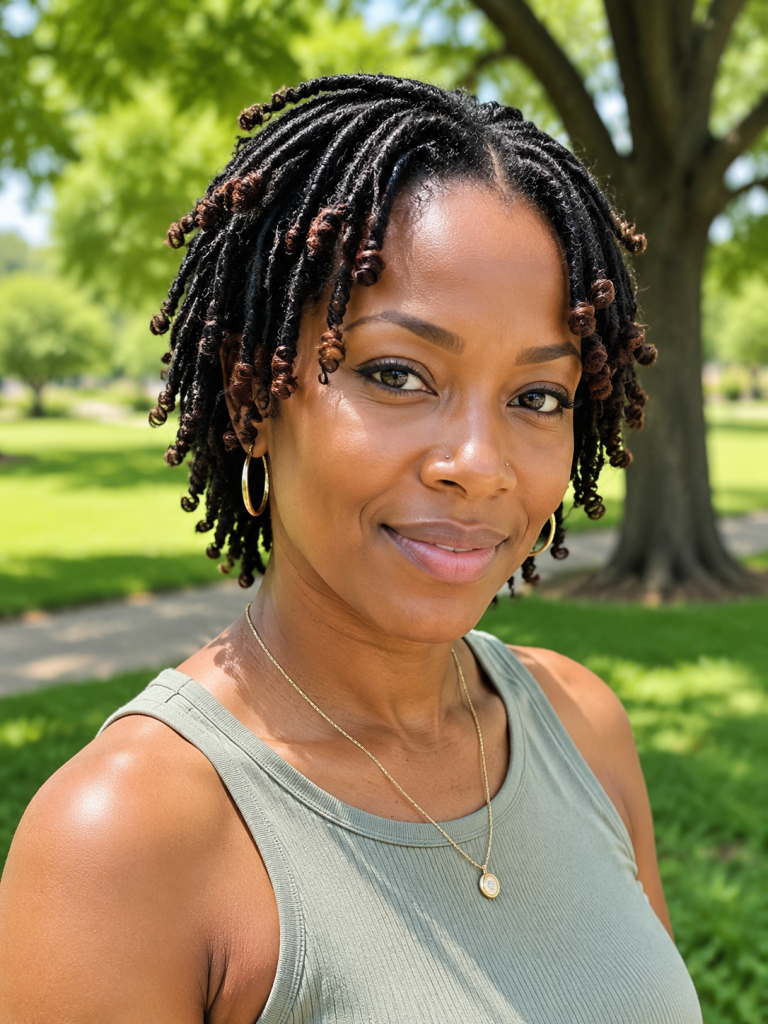
Finger coiling the ends of short locs adds definition and a slightly more polished, sculpted finish to the natural loc texture. This technique works especially well on freshly retwisted locs, where the ends are still smooth enough to coil cleanly.
Short Locs Updo with Twisted Sections
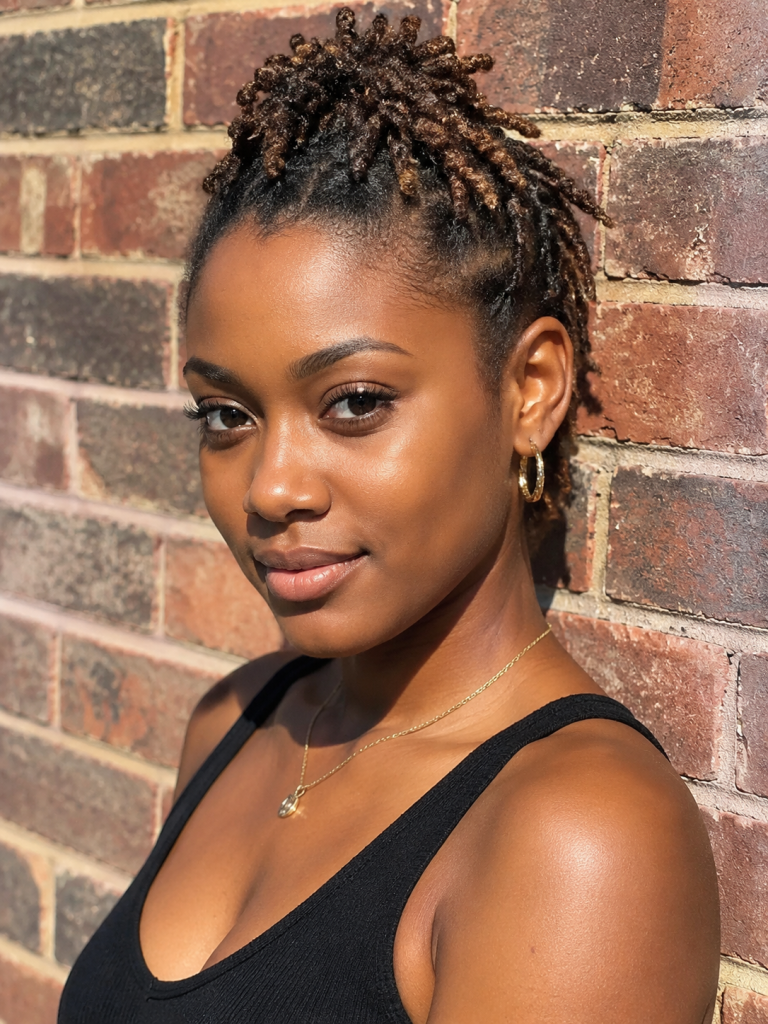
Twisting small sections of short locs and pinning them together at the crown creates a compact updo effect without needing significant length. This style works well for formal occasions and holds securely even on locs still in earlier developmental stages.
Short Locs with Shaved Sides
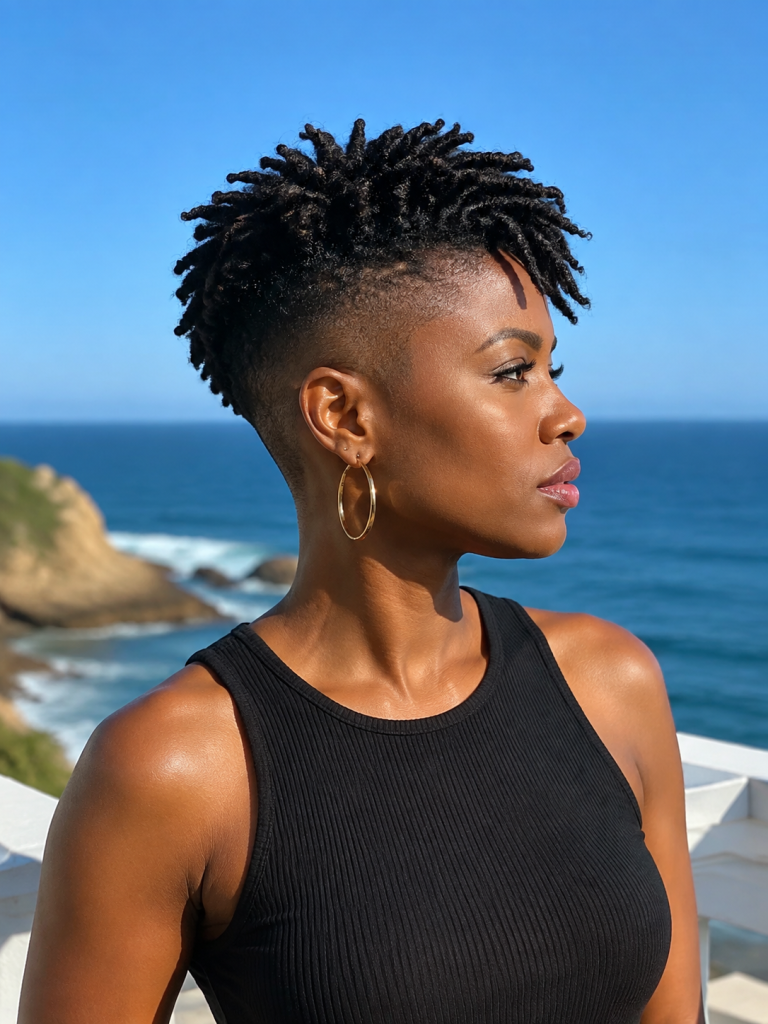
Pairing short locs on top with closely shaved or faded sides creates a bold, high-contrast silhouette. This style keeps the head cool in warmer months and shows off the locs’ texture and movement against the clean, minimal sides beneath them.
Short Locs with Wrapped Sections
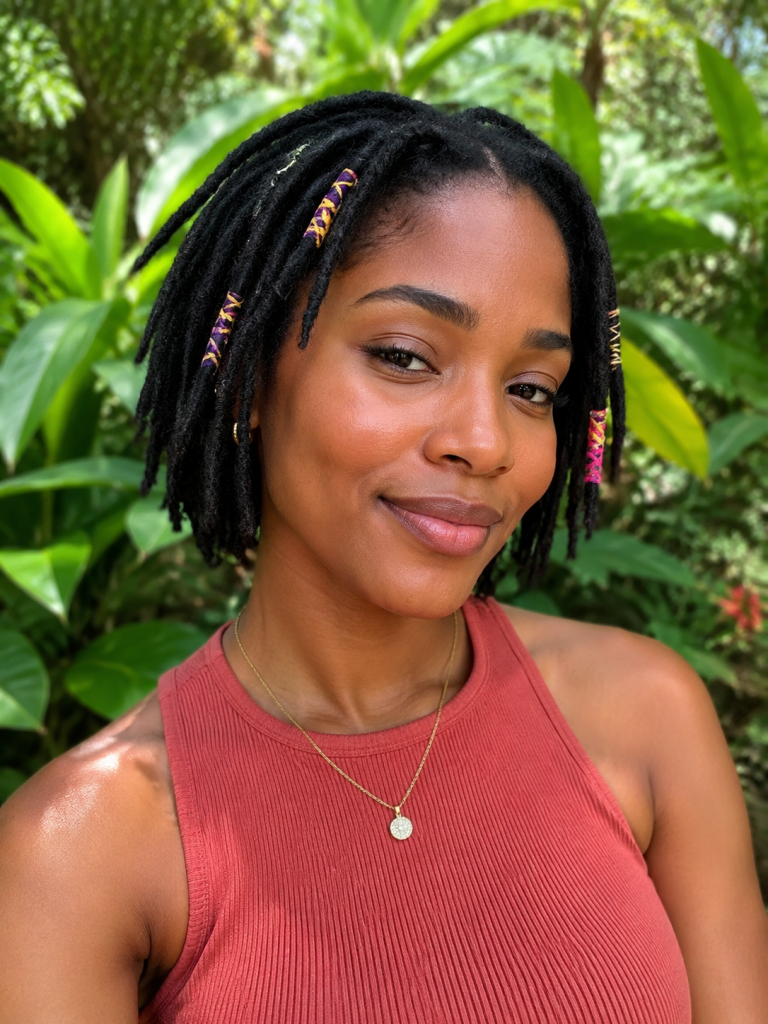
Wrapping thread or fabric around select short locs adds a decorative, textured element without affecting the rest of the style. This is often used to highlight a few face-framing locs or create a subtle pattern throughout, adding personalization without a permanent color or cutting commitment.
Bantu Knot Short Locs
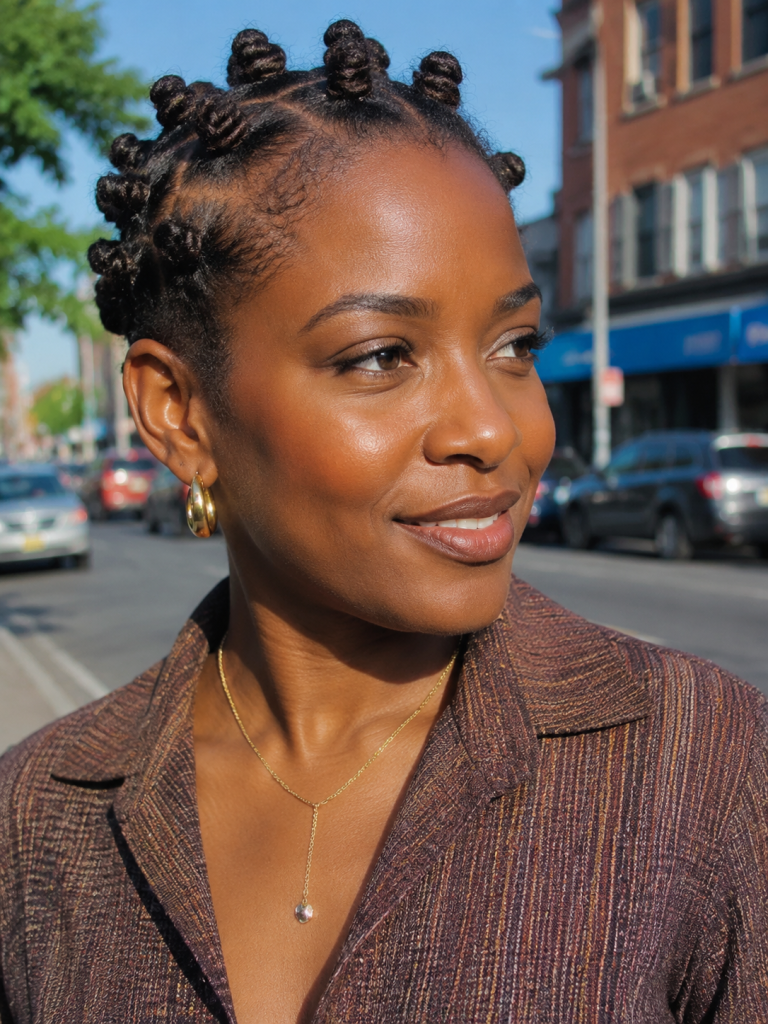
Twisting sections of short locs into small Bantu knots close to the scalp creates a structured, sculptural look that works well for both everyday wear and special occasions. This style holds its shape particularly well on shorter locs, since there’s less weight pulling the knots loose throughout the day.
Short Locs with Curved Part
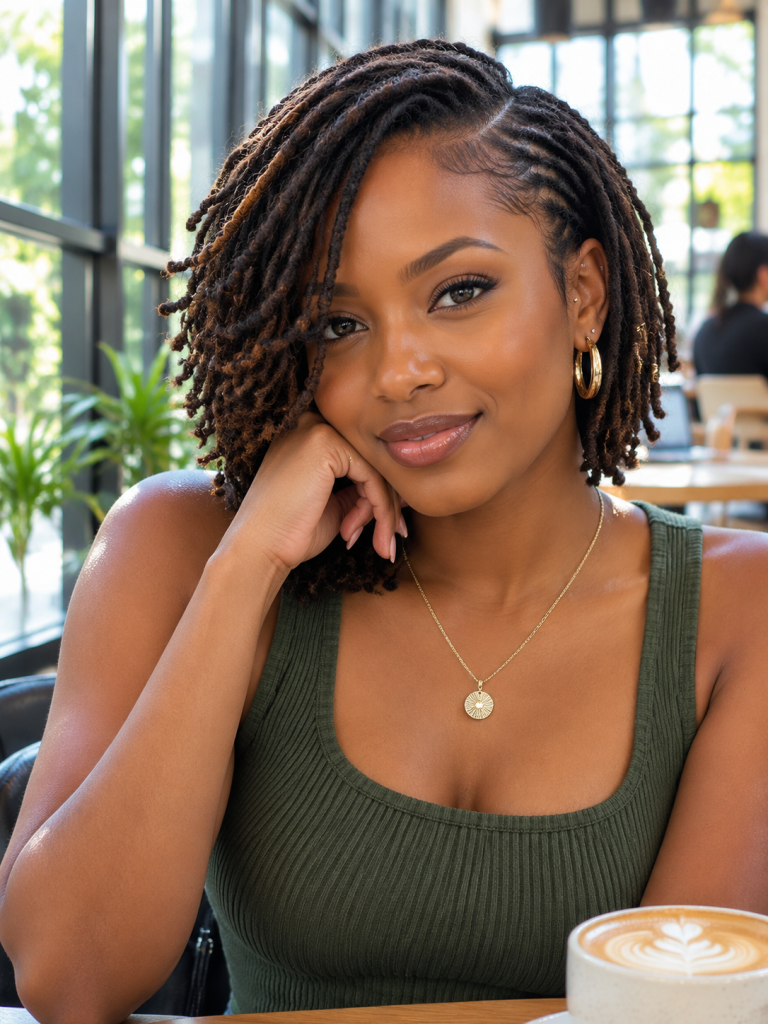
A curved, swooping part rather than a straight line adds a softer, more creative structural detail to short locs. This works especially well combined with a side-swept front section, giving the style a bit more visual movement than a standard straight part.
Short Locs Pushed Back with Headband
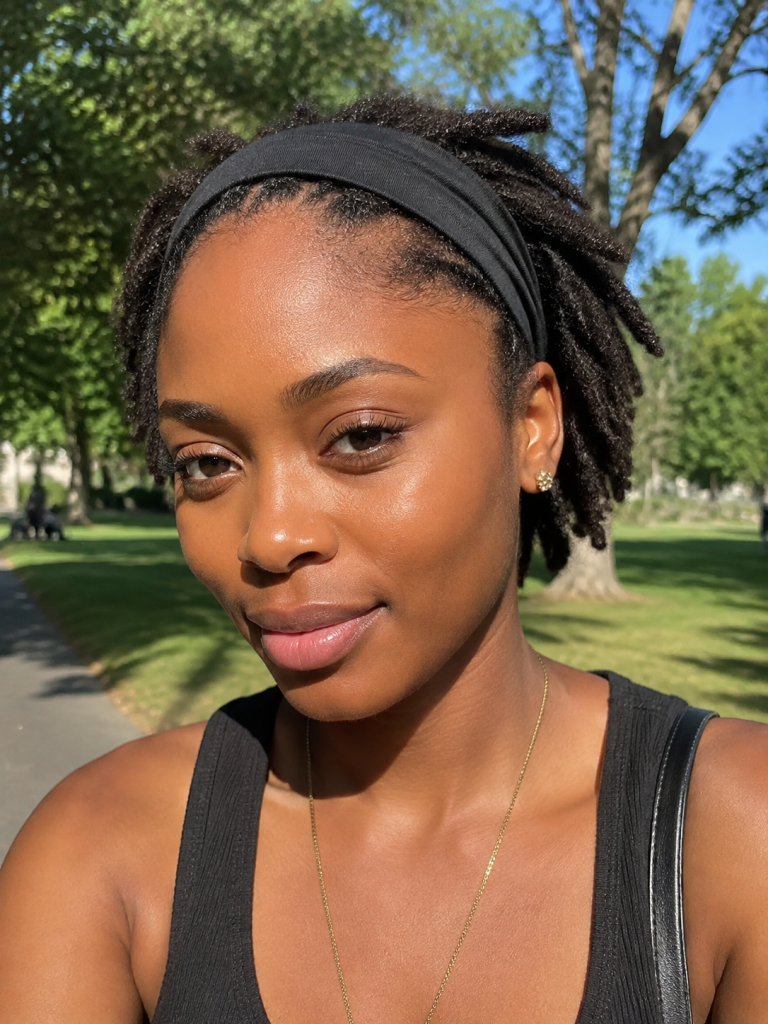
Using a wide headband to push short locs back off the face offers a fast, low-effort styling option that still looks intentional. This works well for casual, everyday wear and requires no pinning or twisting, just placement.
Short Locs with Retwisted Roots
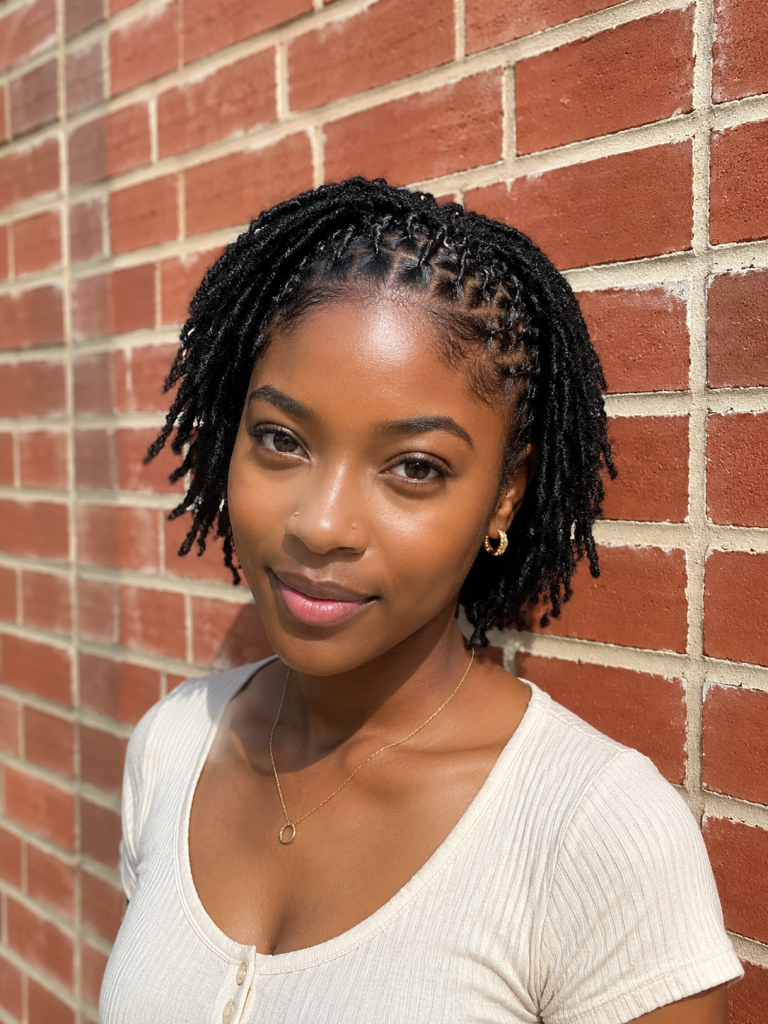
A fresh retwist focused specifically at the roots keeps short locs looking neat and recently maintained without redoing the full length. This is a common approach for extending time between full retwists while keeping new growth controlled at this earlier, faster-growing stage.
Short Locs in a Low Bun
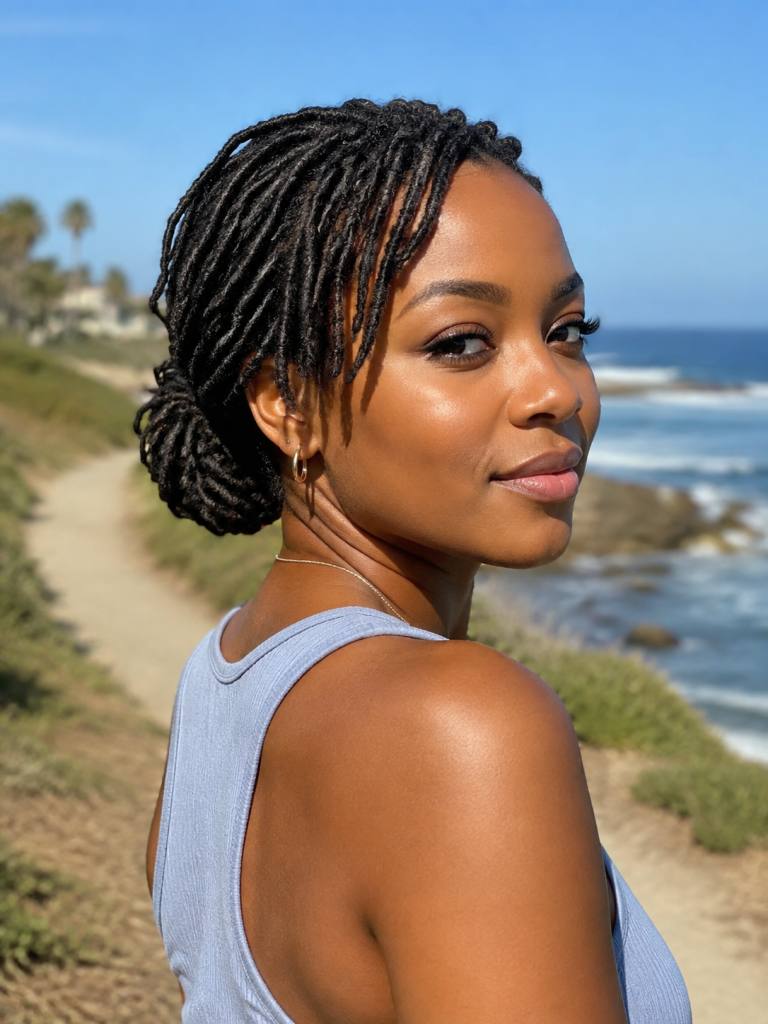
For locs with just enough length to gather, a small, compact low bun at the nape offers a polished updo option. This works once locs reach roughly chin length or slightly longer, and holds securely with a few pins since shorter locs stay lightweight and manageable.
Short Locs with Curly Faux Style
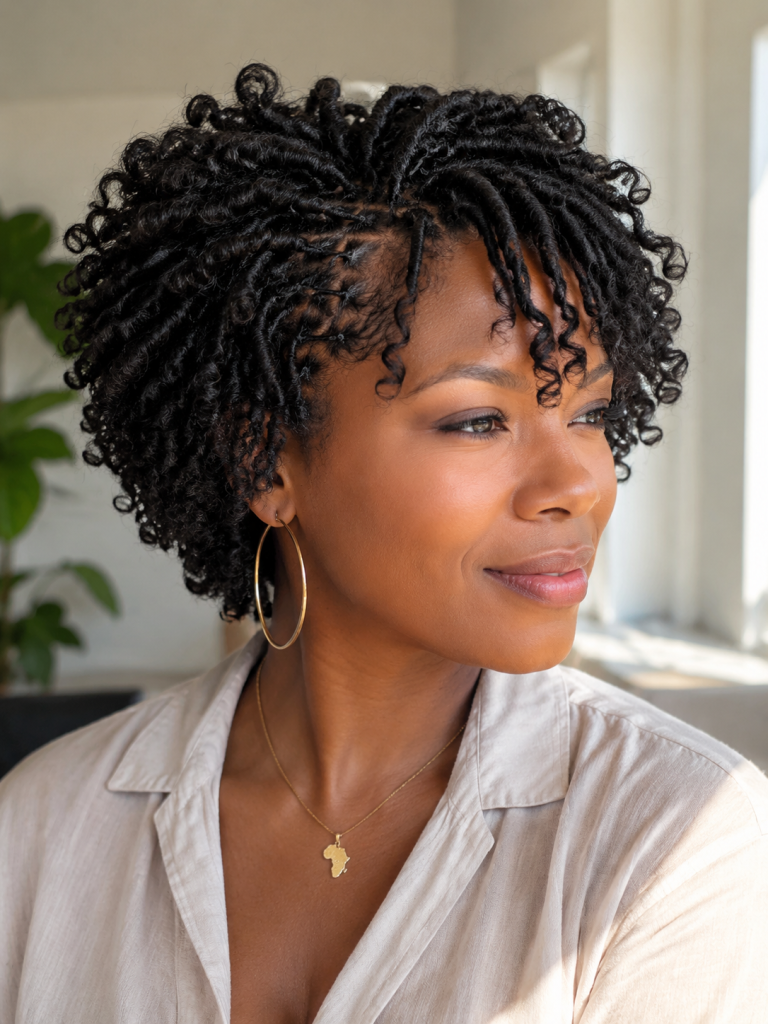
Combining short natural locs with curly extensions or a faux loc technique creates added length and volume temporarily. This offers a way to experiment with a longer look before committing to it permanently through actual loc growth.
Short Locs with Undercut
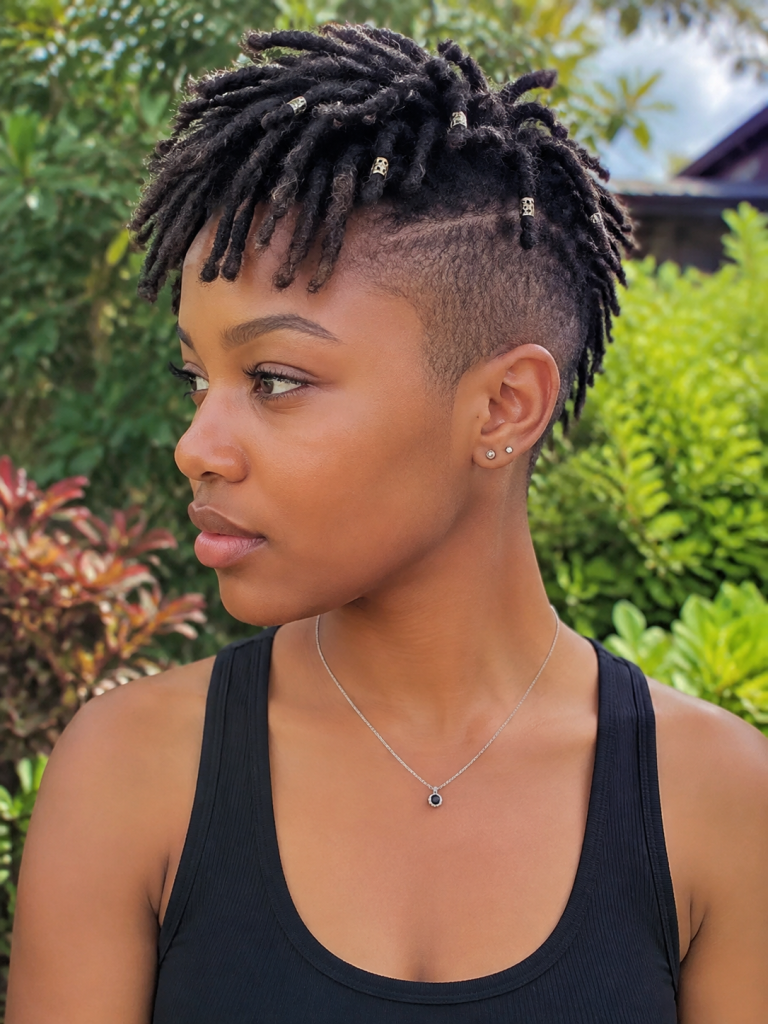
A subtle undercut beneath the visible top layer of short locs reduces bulk and adds an edgier structural element to the overall style. This works particularly well for thicker loc sizes that benefit from some weight removal underneath.
Freeform Short Locs
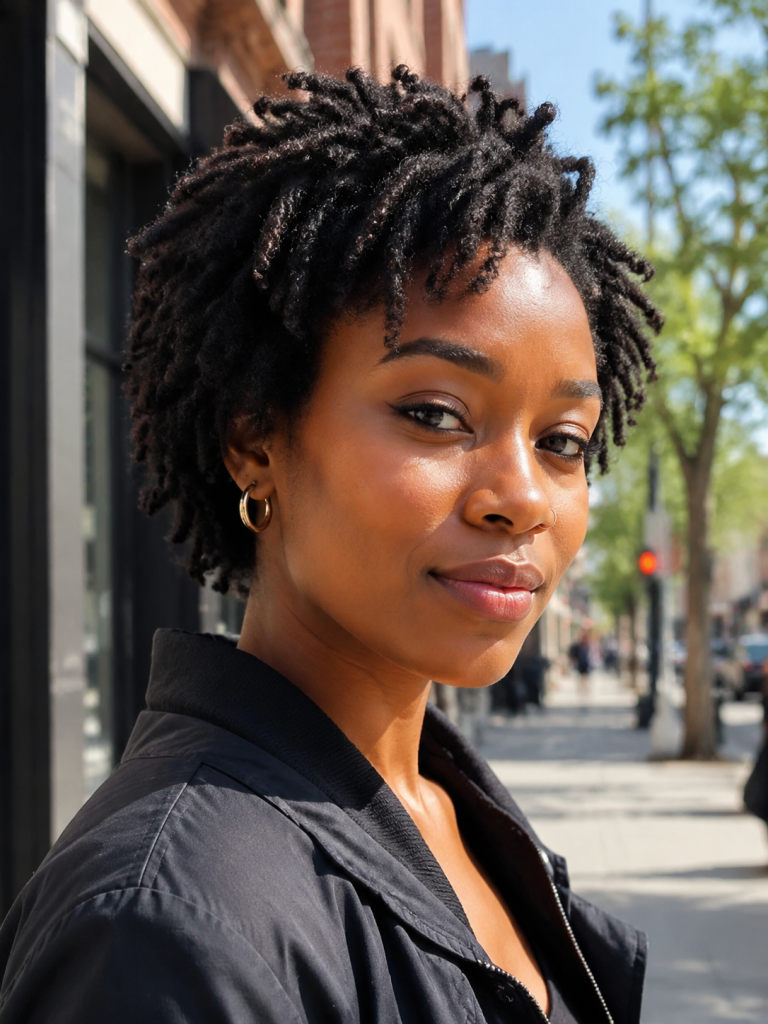
Allowing locs to form naturally without regular retwisting or manipulation creates a more organic, textured short loc style. This approach requires less ongoing maintenance than traditional retwisting methods, though the resulting shape and texture will vary more from loc to loc.