Fine hair after 60 doesn’t limit your pixie options, it actually makes pixie cuts perform better than almost any other length. Short cuts remove the weight that drags fine hair flat, and the right pixie gives you volume, shape, and a finished look with less daily effort than longer styles ever will. The real decision is about texture, fringe, and how much styling time you want to spend. Every cut below is a genuine, workable option, not a consolation prize.
Classic Tapered Pixie
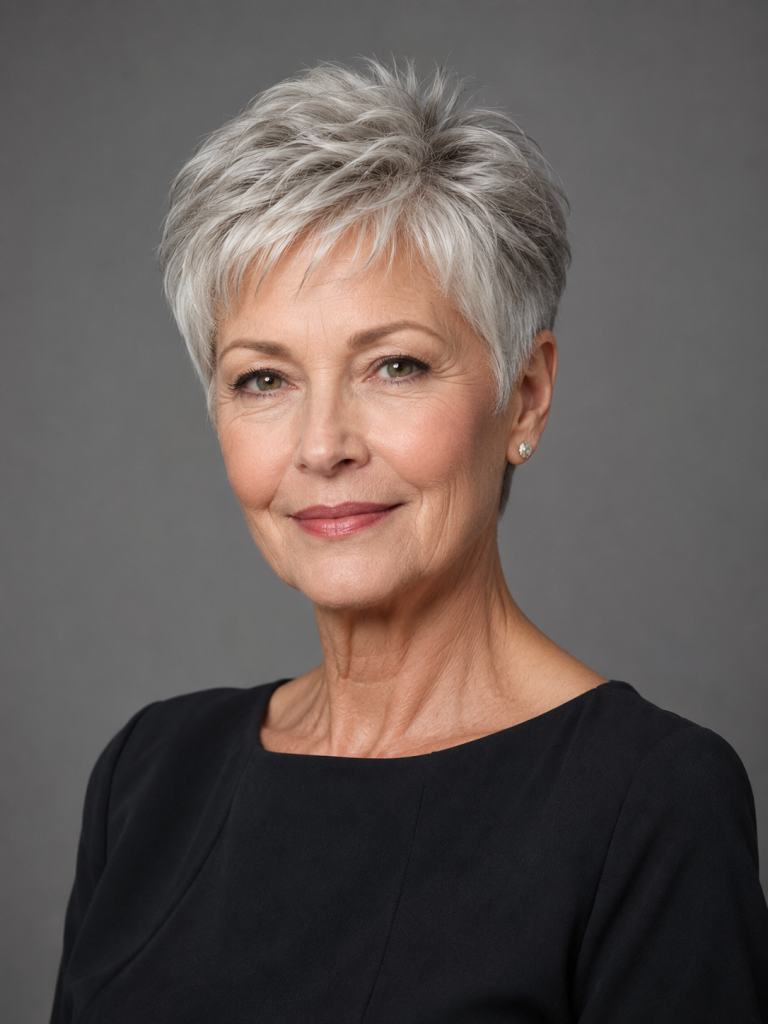
The most requested pixie for a reason. Hair is kept short at the nape and sides with slightly more length on top, creating a clean, intentional silhouette that suits fine hair because there’s nothing competing for volume. Ask for a close taper at the back rather than a hard undercut. A volumizing mousse worked through damp hair and a quick blow dry with a vent brush lifts the crown without effort. Low maintenance between cuts, easy to style daily.
Textured Pixie Crop
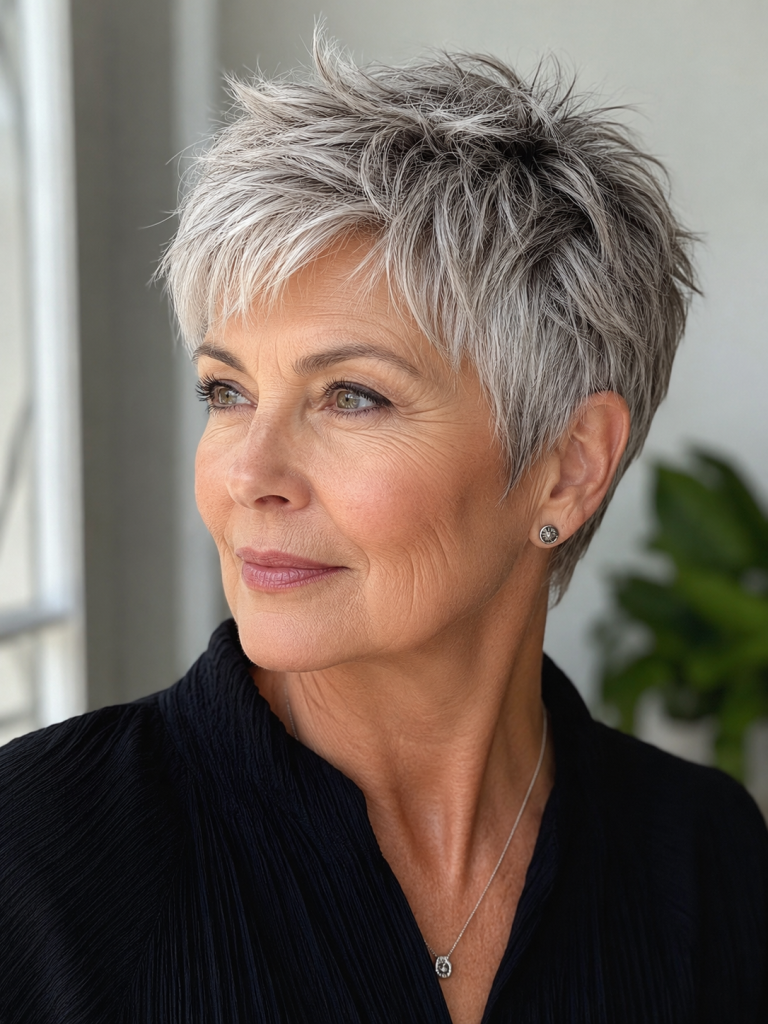
The textured pixie crop is consistently one of the strongest 2026 cuts for fine hair. The stylist works point-cut or razor techniques into the top section to create separation and movement rather than a flat, painted-on finish. This is the cut that makes fine hair look deliberately styled rather than thin. Scrunch a small amount of lightweight pomade through dry hair to enhance the texture. Works equally well air-dried or with a quick rough-dry using your fingers.
Pixie With Side-Swept Bangs
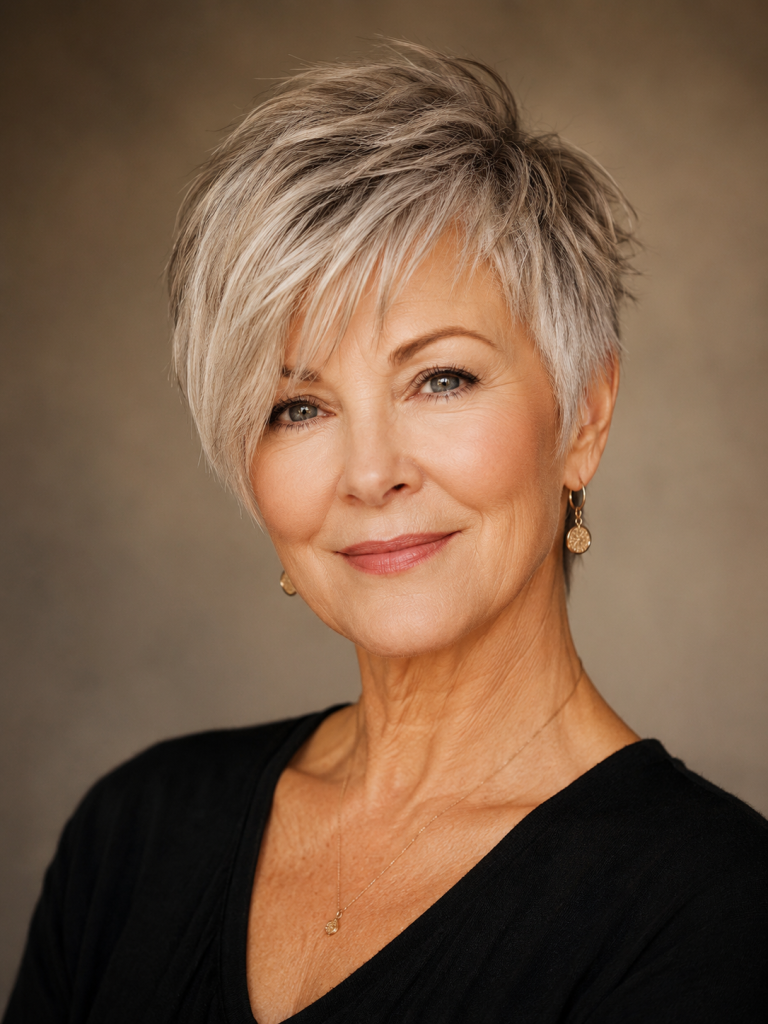
Side-swept bangs on a pixie add softness and a slightly asymmetric quality that keeps the look from feeling severe. For fine hair, ask for the bangs to be point-cut at the tips rather than blunt, which adds feathering and prevents them from lying flat against the forehead. Blow-dry the bangs across with a small paddle brush for lift at the root. A light-hold spray keeps them in place without stiffness. Grows out gracefully, which matters for a fringe commitment.
Soft Wispy Pixie
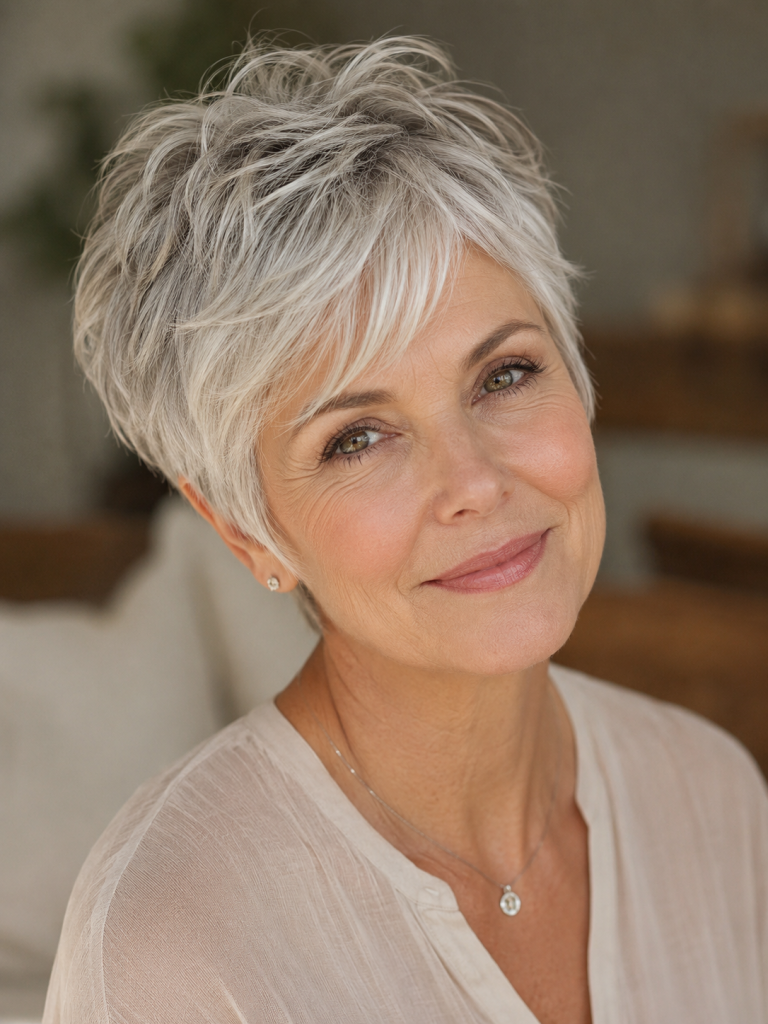
Wispiness is often treated as a fine-hair problem, but this cut makes it the whole point. Layers are kept feathery and light throughout, with no heavy or blunt sections. The result has an airy, effortless quality that suits women who want a pixie with movement rather than structure. Minimal product is genuinely the right call here, too much and the delicate texture disappears. A tiny amount of lightweight styling cream on the fingertips, worked through the ends only, is enough.
Pixie With Longer Crown
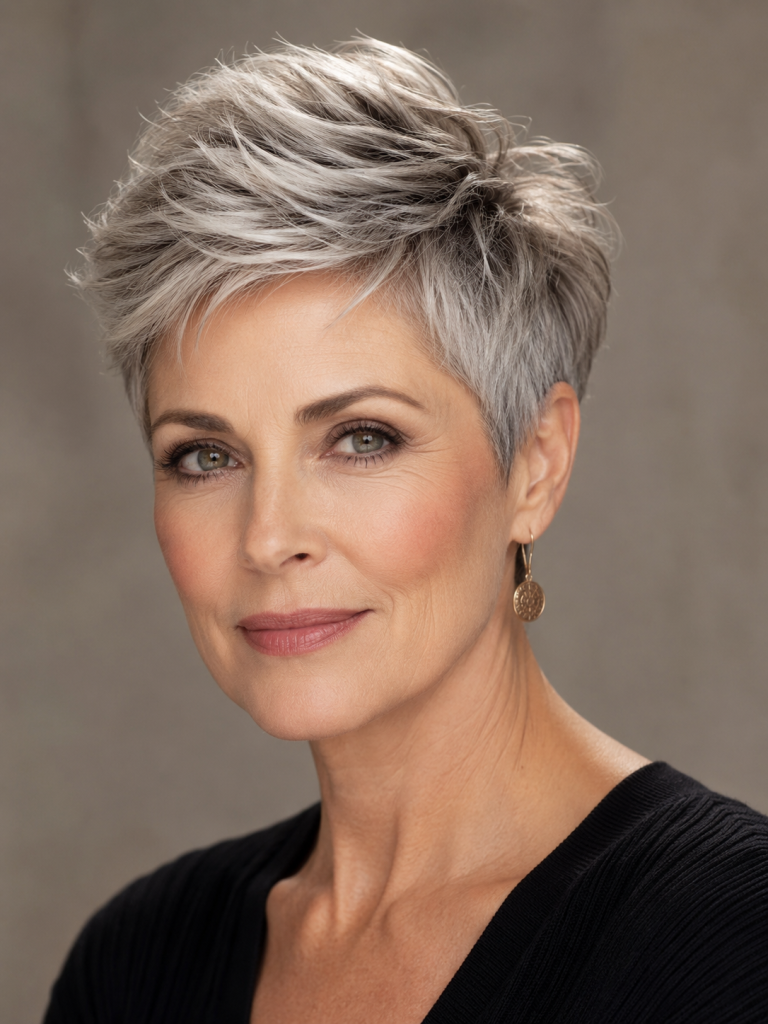
More length on top, closer-cut sides. The contrast between the two creates built-in volume at the crown without relying on products to manufacture it. This proportion works particularly well for fine hair because the shorter sides remove bulk where it doesn’t help, and the longer top has room to be styled with a round brush for serious lift. Ask for graduation rather than a hard disconnect between the top and sides. The grow-out phase is also more forgiving than a close-cut all-over pixie.
French Crop Pixie
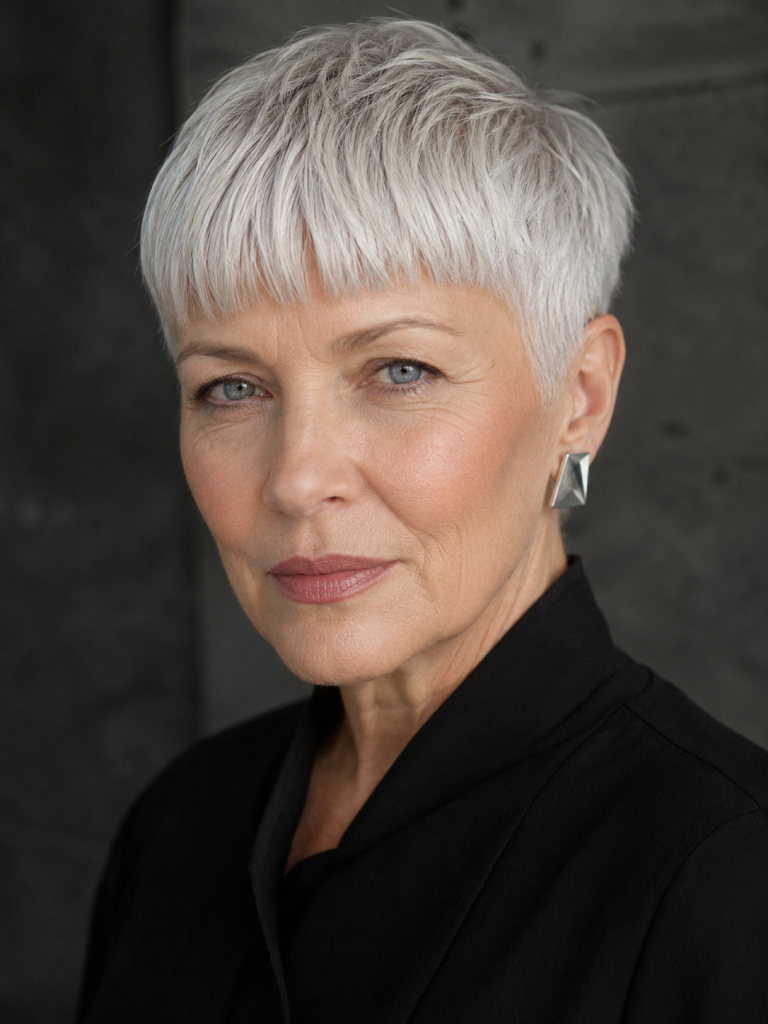
A French crop brings a horizontal fringe across the forehead, cut bluntly or with slight texture, paired with closely tapered sides and back. For fine hair, request the fringe be cut at medium density rather than too thin or too thick, both extremes are harder to style daily. Blow-dry the fringe forward with a flat brush, then use a tiny amount of matte paste to keep it sitting flat without looking greasy. A sharp, modern choice that requires minimal daily effort once the technique is down.
Feathered Pixie
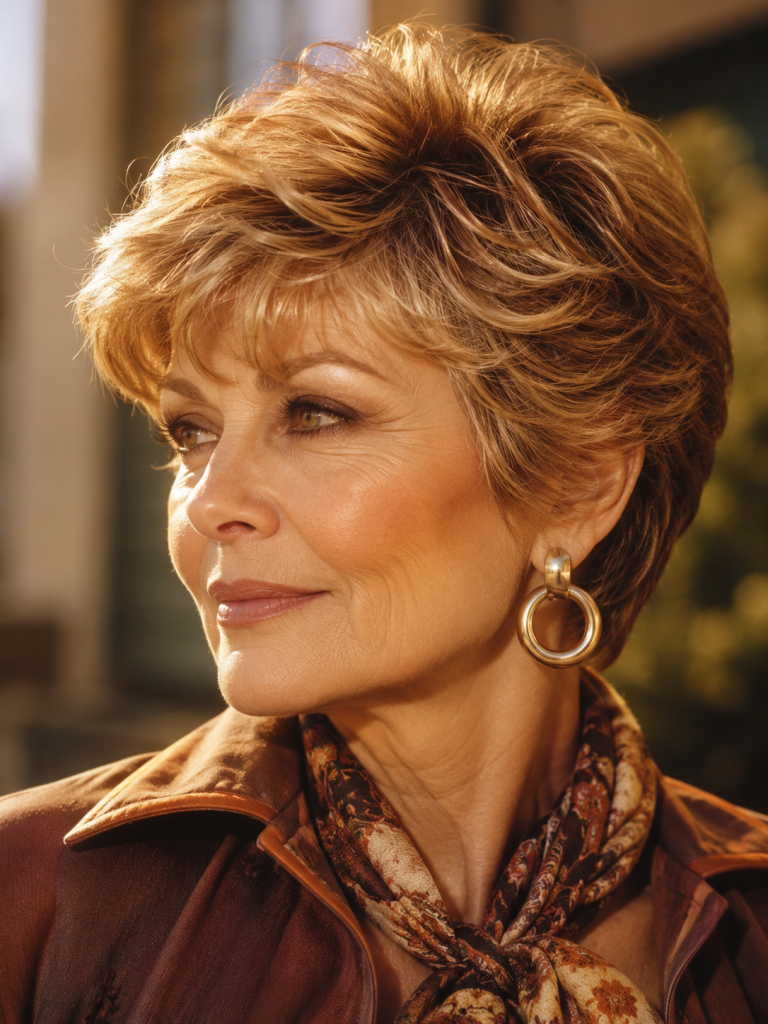
The feathered pixie takes the ’70s-revival trend and scales it to short hair. Layers are cut to flick outward slightly at the sides and crown, creating a soft, winged texture that adds the illusion of more density. This technique actively works in fine hair’s favor because lighter hair feathers and lifts more readily than thick hair. Use a round brush and low-to-medium heat to encourage the flick. A flexible hold spray locks the shape. Salon trims every six weeks keep the feathering intentional.
Choppy Layered Pixie
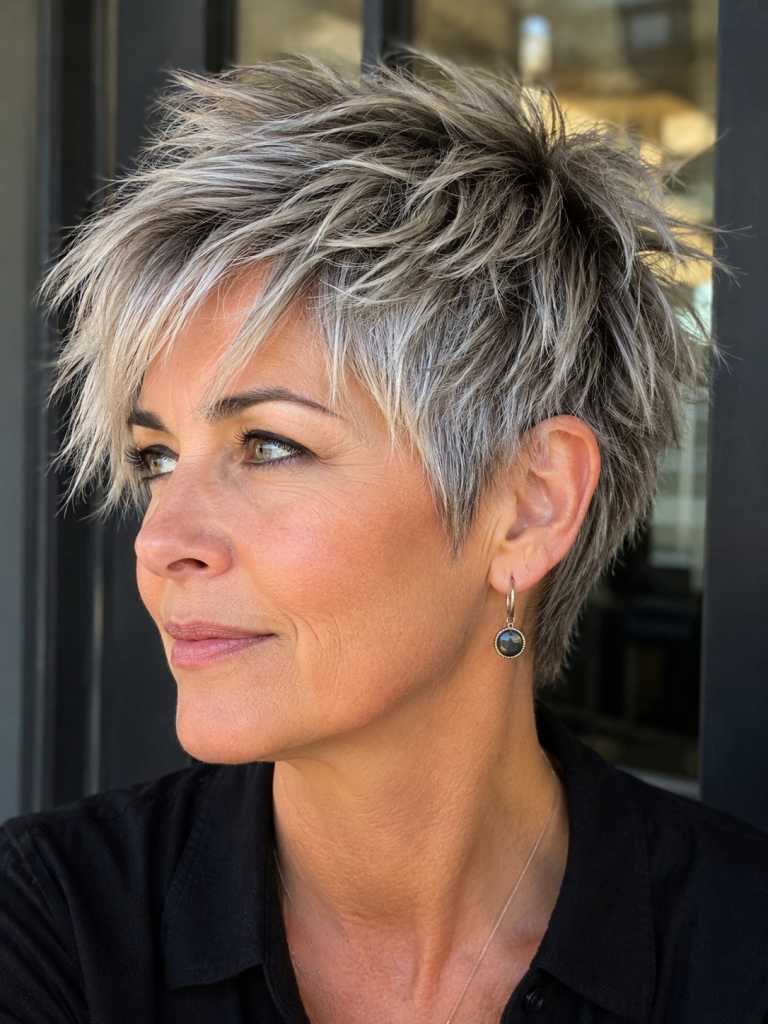
Choppy layers through a pixie create strong separation and a deliberately undone finish. This is the opposite of a smooth, polished pixie, and it suits women who prefer low-key, character-led styling over a more groomed look. Fine hair benefits because the choppy sections catch light and create the appearance of more texture. Work a small amount of texturizing paste between your palms and press it through the hair rather than combing. The messier the application, the better this cut performs.
Pixie With Curtain Bangs
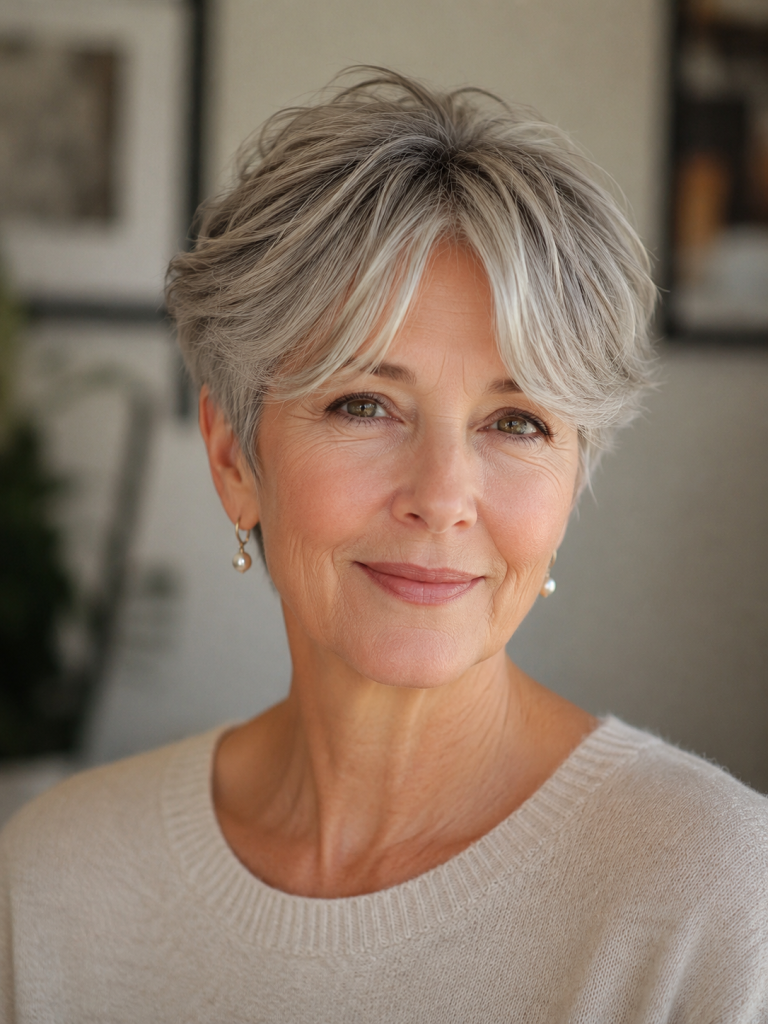
Curtain bangs aren’t just for long hair. On a pixie, a short version parted at the center and swept outward toward the temples gives a softness that a traditional side-swept fringe doesn’t. This is a good choice for fine hair because the center part creates natural lift at the root. Blow-dry each side outward with a small round brush. The bangs should skim the brow rather than cover it fully. Touch-ups with a small curling iron or flat iron take under two minutes.
Asymmetrical Pixie
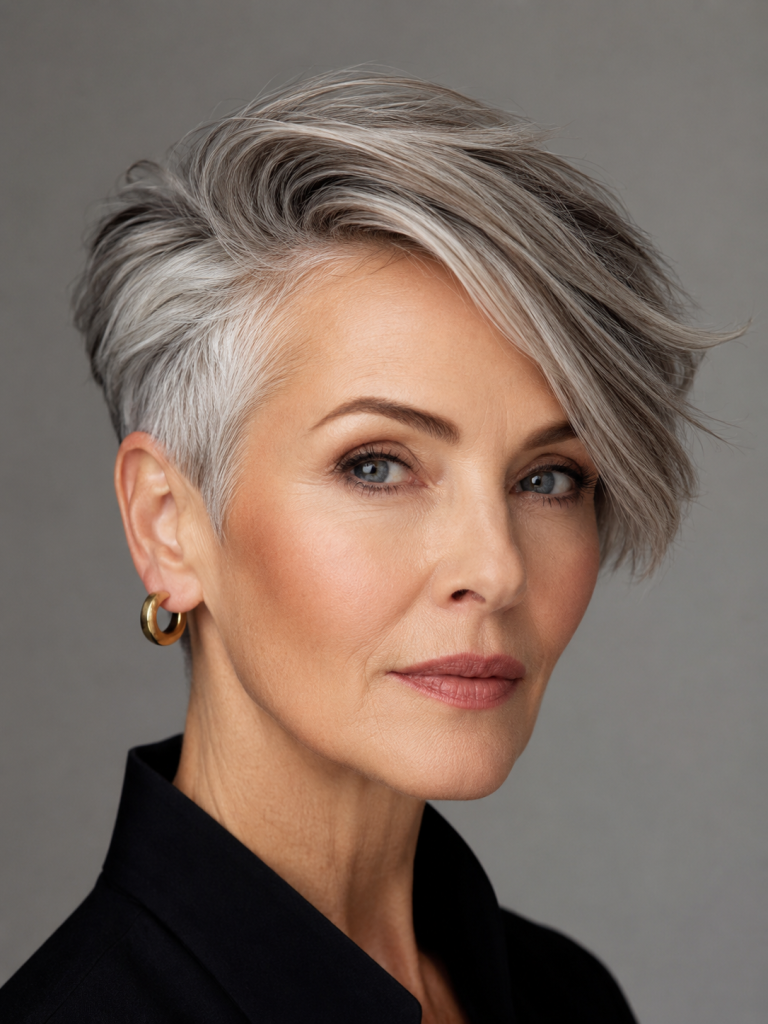
One side longer than the other adds visual interest without requiring any extra styling effort once the cut is done. The length differential creates movement and an intentional, directional quality. For fine hair, the longer side gives you something to work with, whether you sweep it back, tuck it behind the ear, or let it fall forward. Ask your stylist for a gradual rather than dramatic length difference, it’s more wearable for daily life and grows out more cleanly.
Undercut Pixie
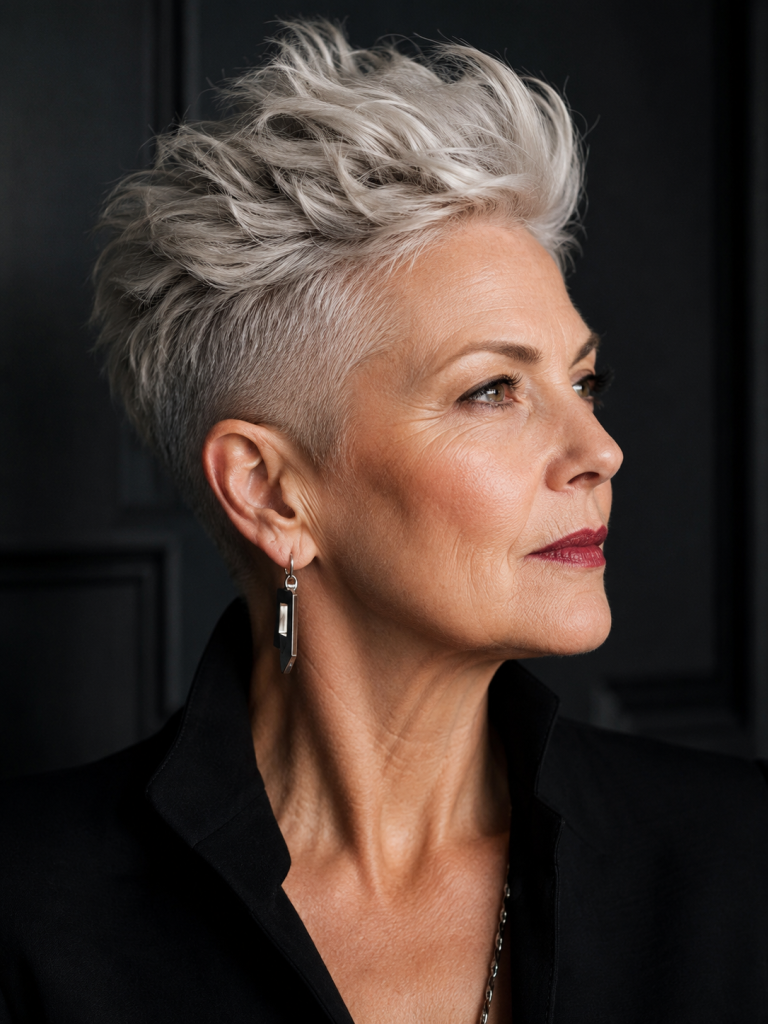
The undercut pixie keeps the nape and sometimes the sides very closely clippered, with noticeably more length on top. The contrast is striking and modern. For fine hair, the undercut approach is particularly practical because it eliminates the flat, lying-flat problem at the back of the head entirely. The weight is removed where fine hair struggles most. Keep a lightweight volumizing spray at the root of the top section before styling. Ask your stylist to show you the nape line so you can maintain it between cuts with clippers.
Voluminous Crown Pixie
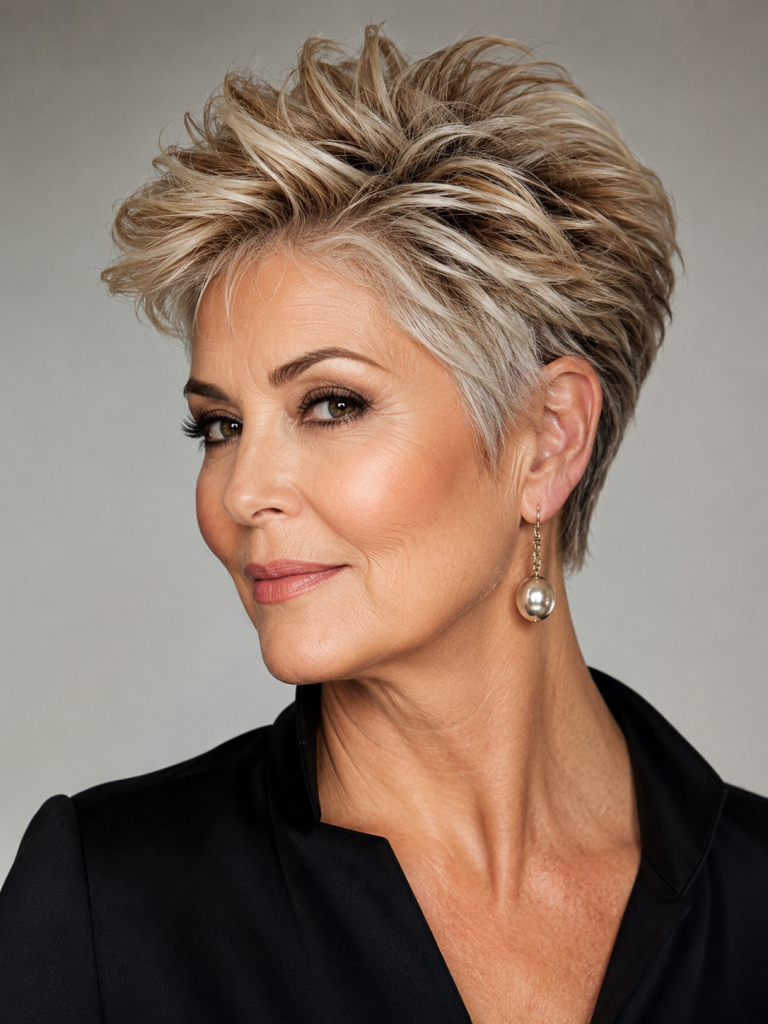
The entire design intent of this cut is maximum height and volume at the crown. Layers are cut specifically to build upward rather than fall flat. For fine-haired women over 60 who want presence and lift, this is one of the most effective cuts available. Apply volumizing mousse from root to mid-length before blow-drying, then direct all airflow upward. Finish with a lightweight dry texturizing spray at the root once dry. Don’t touch it after, it holds better when left alone.
Nape-Tapered Soft Pixie
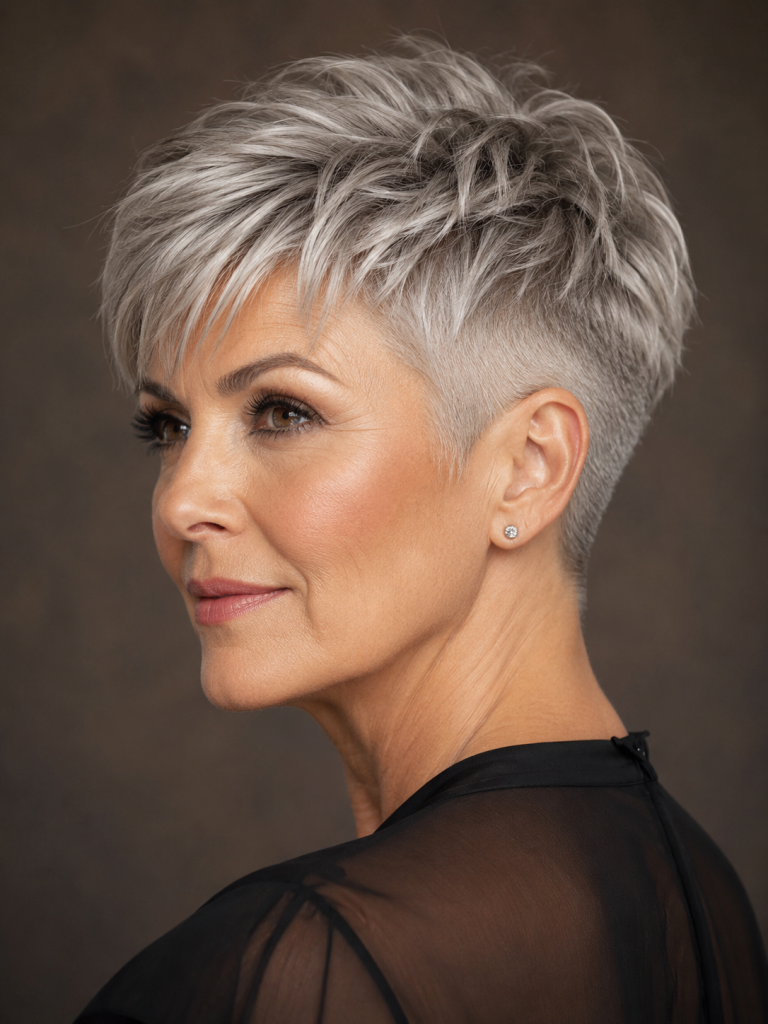
A close, skin-fade taper at the nape gives a beautifully clean finish at the back without the cut feeling harsh overall. The rest of the hair, crown and top, stays soft and slightly longer. This is a practical consideration for fine hair because the nape area tends to lie flat and thin regardless of styling. Tapering it close removes the problem entirely. The result feels polished and put-together without effort. This taper also extends the time between salon visits because the back stays tidy for longer.
Disconnected Pixie
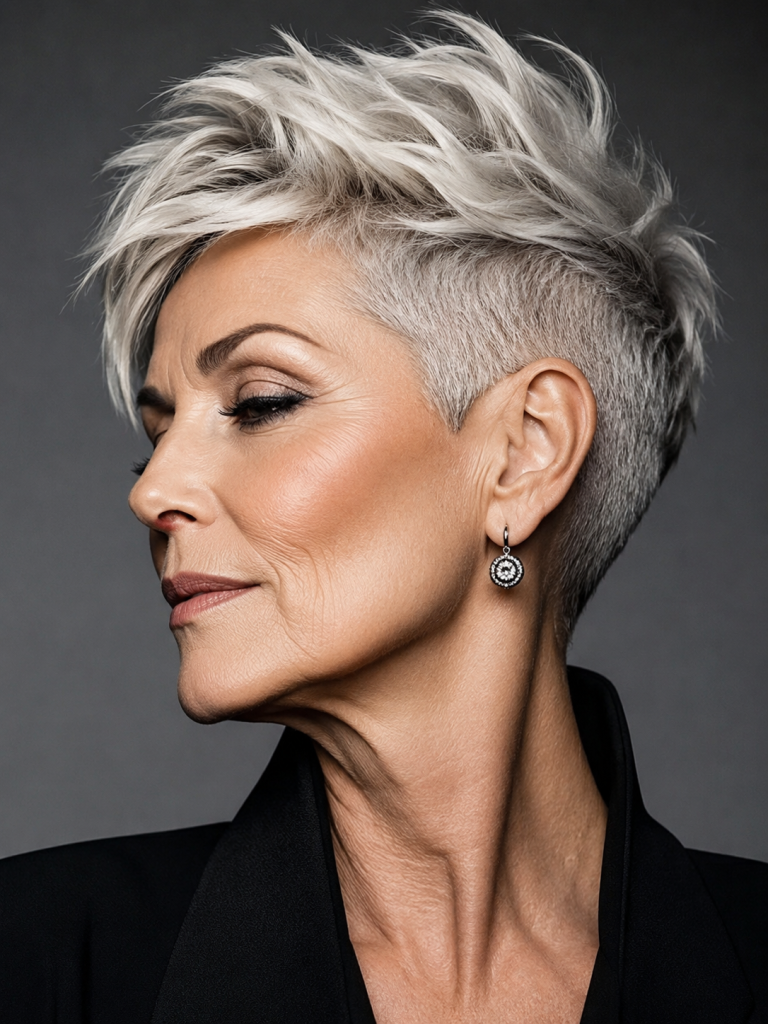
A disconnected pixie has a deliberate contrast between sections, usually a closely cut or shaved side with a clearly separate, longer top. It has a strong graphic quality that works across natural gray, silver, and colored hair. Fine hair suits this cut well because the disconnected sections create visual interest that doesn’t depend on density. Styling is minimal, the cut does the work. A small amount of matte pomade on the top section, pressed in with fingertips, keeps the definition without adding shine.
Pixie With Micro Fringe
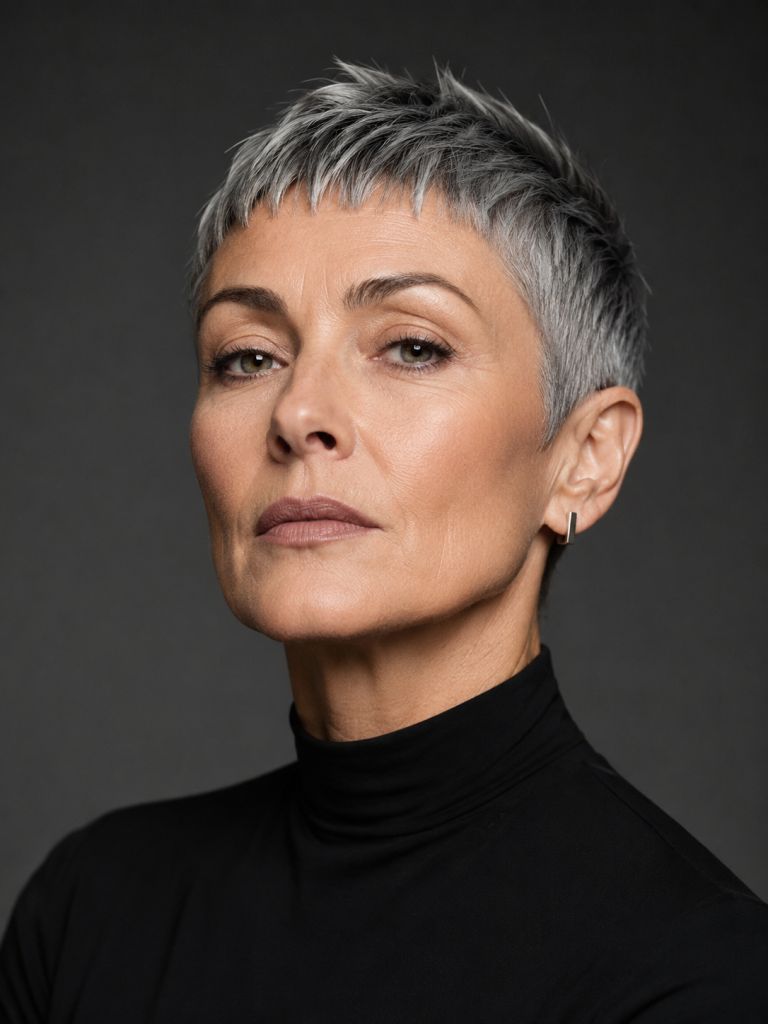
A micro fringe, short enough to sit above the eyebrow, is a bold, specific choice that works particularly well on a pixie frame. It’s a committed look, but for women over 60 who want something sharp and decisive, it’s one of the most distinctive options on this list. Fine hair actually suits a micro fringe because there isn’t enough density to make it feel heavy or helmet-like. Keep product minimal on the fringe itself, a tiny bit of clear styling gel to smooth, nothing more.
Modern Shaggy Pixie
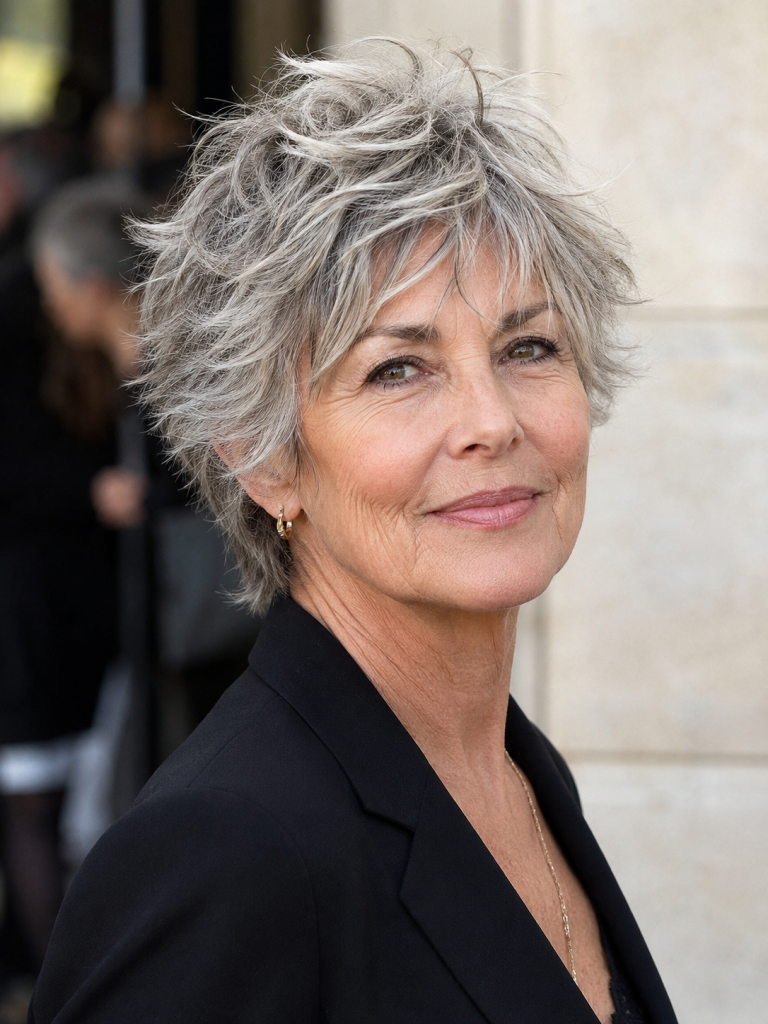
The shag influence applied to a pixie brings in more texture, soft layers, and a loosened-up quality. This is closer to an editorial or artistic take on the classic pixie. For fine hair, the shag technique adds visible movement and a less rigid finish. Ask for internal layers rather than heavily face-framing ones, which can look sparse on fine hair if overdone. A sea salt spray or texturizing mist scrunched into damp hair before air-drying gives a natural, slightly tousled result with no heat required.
Pixie With Face-Framing Layers
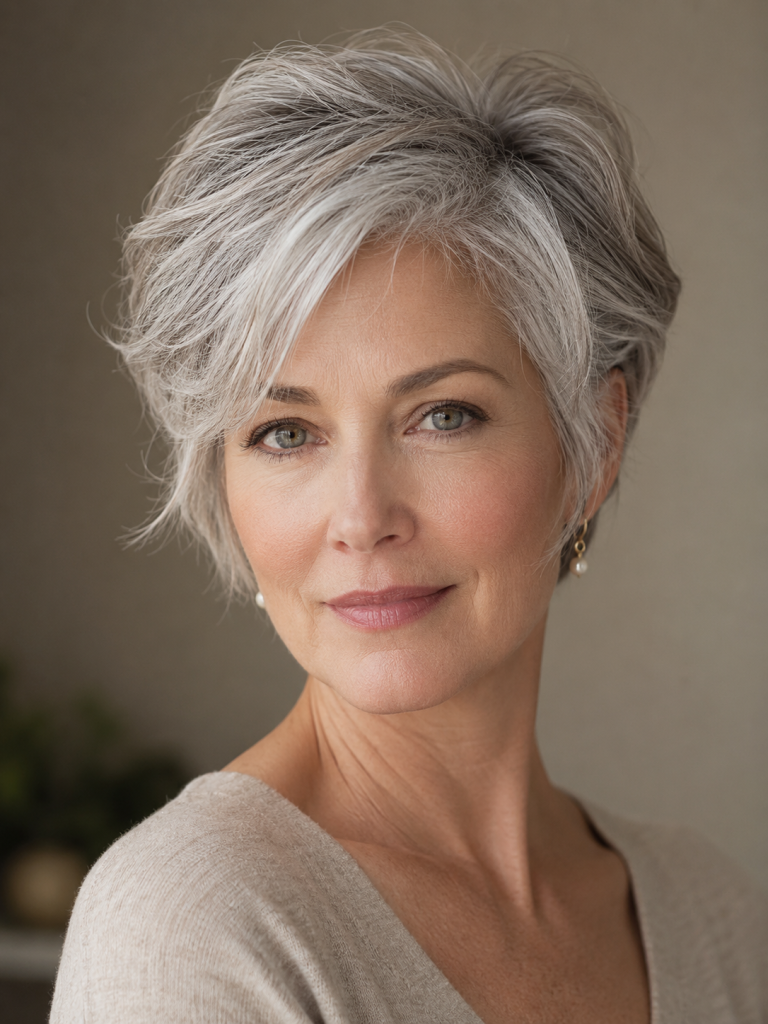
Face-framing layers on a pixie are short, wispy pieces that fall forward around the cheekbone and temple area. They add a softening detail that suits women who find a strictly cropped pixie too stark. For fine hair, keep the framing pieces light, just a few strands rather than a full swooped section, or they’ll lie flat instead of falling with intention. A small round brush on low heat encourages them to curve forward gently. Works well on natural gray and silver hair because the color contrast makes the layers visible.
Soft Bowl Pixie
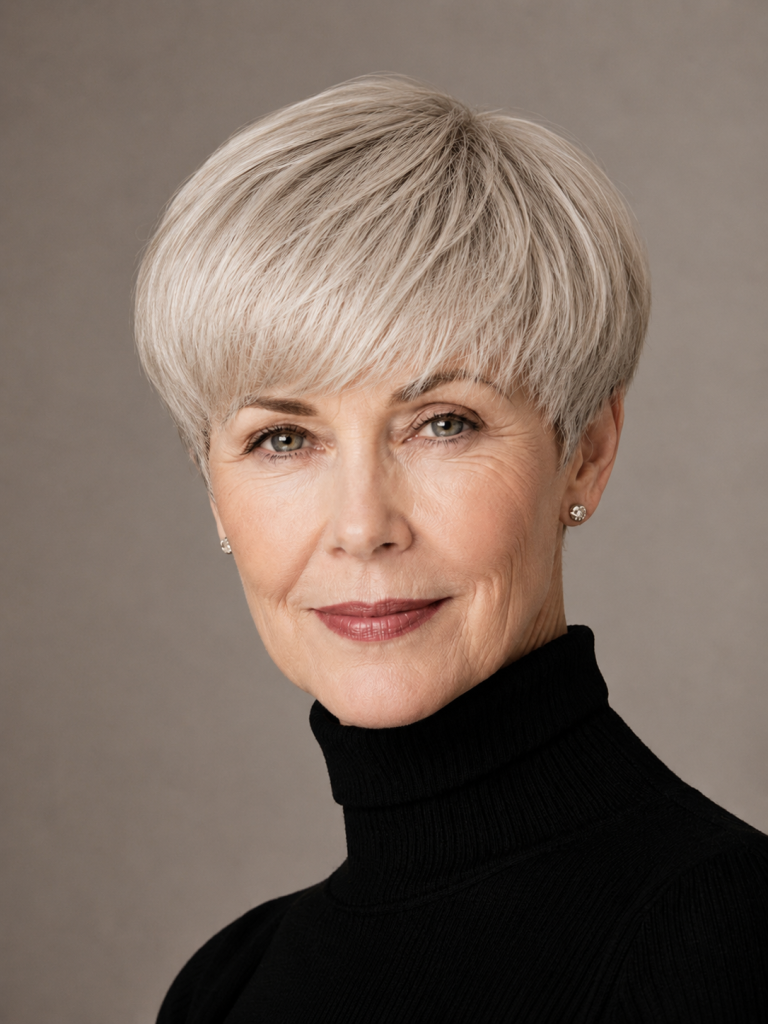
The bowl pixie takes the bowl-cut’s rounded top line and softens it with texture and graduation at the sides rather than a blunt perimeter. It has a slightly retro, geometric quality that feels current rather than dated when done with modern techniques. Fine hair benefits from the rounded shape because it creates the outline of fullness even without density behind it. Blow-dry the top forward and around, following the curve of the cut. A flexible-hold finishing spray preserves the shape through the day.